
The United States has the largest railway network in the world, stretching over 140,000 miles. It carries approximately one-third of the nation’s exports and transports 5,000,000 tons of freight and 85,000 passengers each day. This system requires regular maintenance and upgrades to ensure the country’s economic and social growth stay on track. Maintenance of Way (MOW) equipment (Tampers, Regulators, Spikers, Anchor Applicators, Etc.), and Hi-Rail vehicles are used by railroad personnel to traverse and maintain this track system.
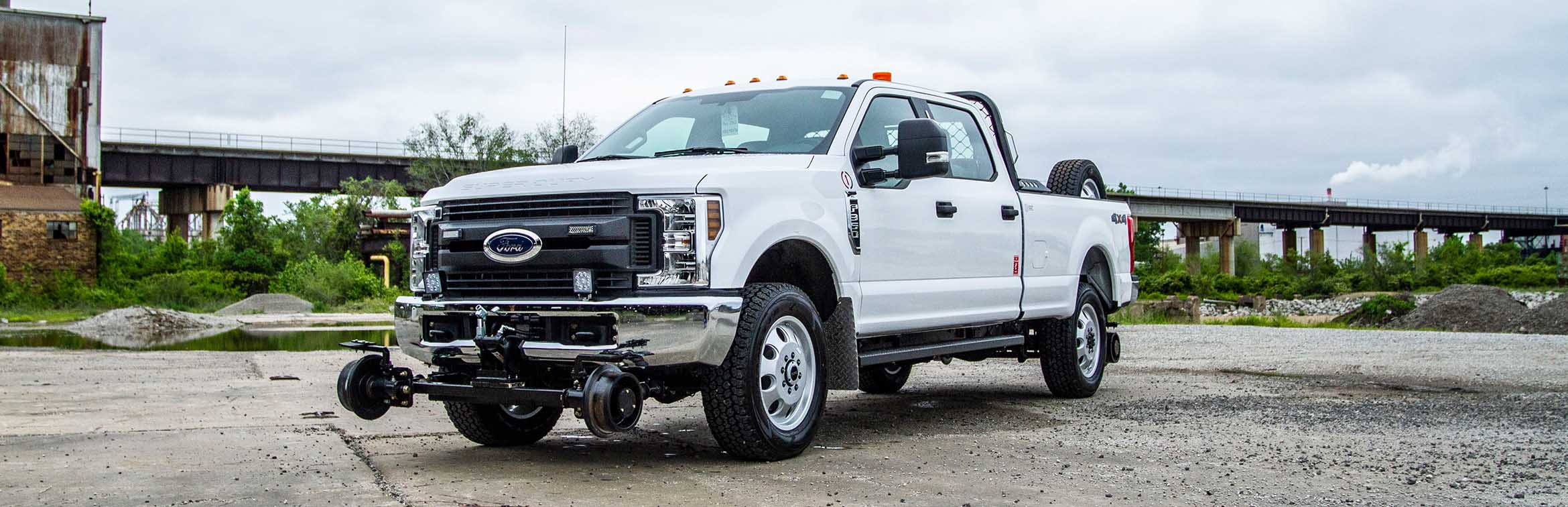
Hi-Rail trucks are dual-mode vehicles, which means they can operate on both railroad tracks and roads (highway + railway = hi-rail). In addition to their rubber tires, hi-rail trucks also have a set of flanged steel wheels that, when deployed, allow the vehicle to travel on railways.
Depending on the system, propulsion may be generated by roadway tires or a hydraulic system. The flanged wheels are often free rolling. Directional control is contingent on rail construction, eliminating the need for steering. Steering locks are installed to prevent the potential for derailment.
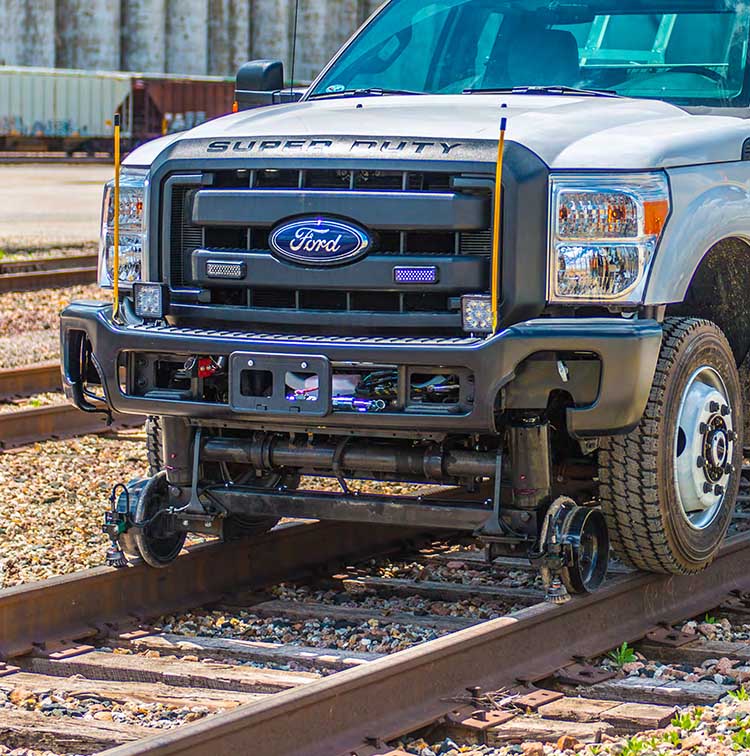
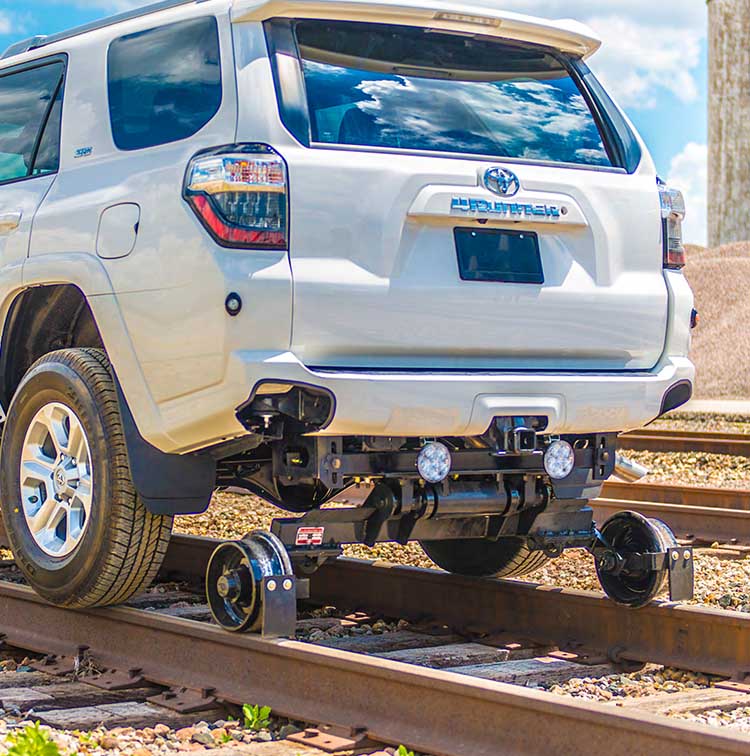
HOW A HI-RAIL TRUCK IS SET ON TRACK
We spoke to the Sales and Service Coordinator of the Rail Division at Custom Truck One Source, a leading provider of hi-rail trucks for sale and rental in North America, to know more about this equipment.
Excerpts from the interview:
What does light, medium, or heavy-duty signify when it comes to hi-rail trucks?
When we’re talking about light-duty trucks, we’re talking about F-350s (spec coding protocol we use: 200-300). Medium-duty is going to be F-550s (spec coding protocol: 400-500). And heavy-duty is going to be larger trucks like F-750s and Freightliners (spec coding protocol: 500-700).
What about chassis?
It’s mostly Fords and some Chevys in the light-duty and medium-duty segments. Heavy-duty, most of the time, it is going to be a Freightliner chassis. Freightliners can be molded a little bit better, and the systems are more conducive to rail applications because of the way the chassis itself is built. You can work with others like Peterbilt and Western Star, of course, but in our experience, Freightliner is a clear choice.
Do customers come to Custom Truck asking for rail gear to be added to their existing truck?
Yes, but we typically shy away from repurposing customer trucks to make them rail-worthy. Mainly because there are a lot of considerations that go into spec-ing out the actual chassis. So, if someone brings us an F-350 or an F-250, thinking one can easily put rail gear on it, the unit may not actually have the base to accommodate that component. We would rather build something from the ground up and design it according to a customer’s needs.
The biggest advantage is the seamless workflow between our design, engineering, production, sales, and customer support teams.
We put in a lot of time to understand the unique needs of each customer, so we can go over the specs with a fine-toothed comb and come up with a build that fully takes care of their needs without unnecessarily spending money on attributes they don’t need. Often, this exercise involves educating the customer as well, so they fully understand why their initial ask may not be practical or why an alternative may give them the level and scope of performance they really want.
We take enormous pride in sending quality hi-rail trucks out the door, and we go the extra mile to ensure everyone is satisfied with the way we execute each and every order.
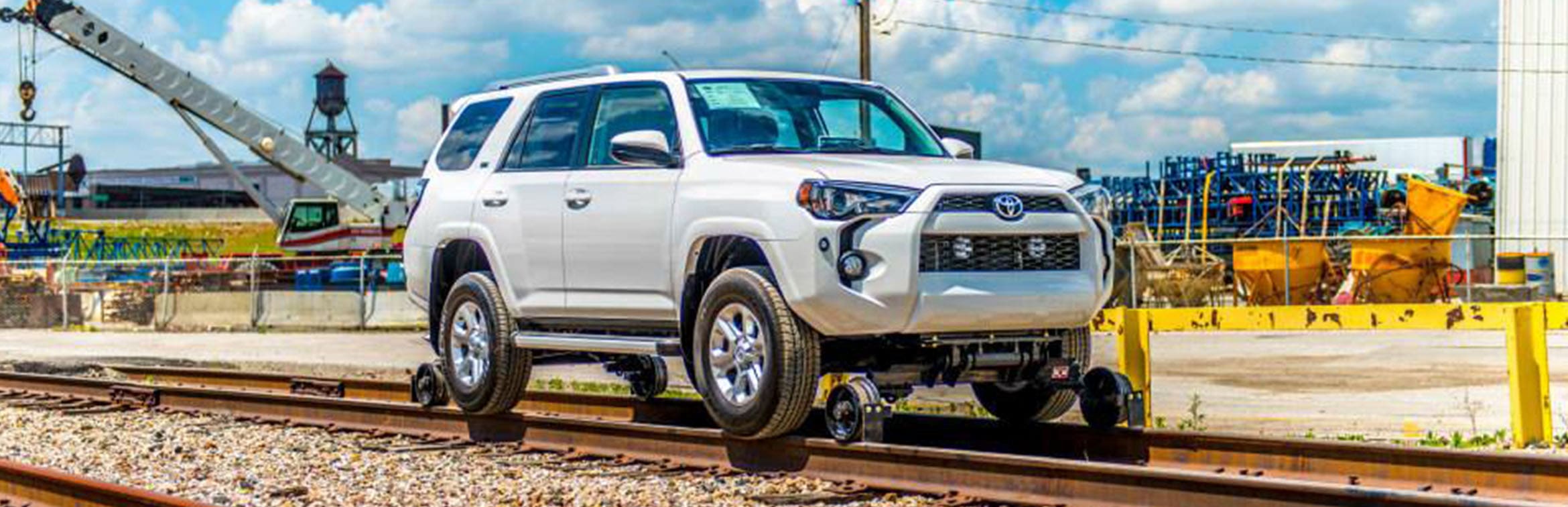
Hi-Rail vehicles come in many different builds. Standard builds include pickup trucks, inspection vehicles, signal maintainers, service trucks, material handlers, welder vehicles, section trucks, and rotary dumps. These standardized builds will often have unique design features that have been requested by their end-user.
Of all the commercial vehicles converted for hi-rail purposes, pickup trucks are one of the most common. Their primary application may range from simple transportation to something more sophisticated, like track geometry.
Inspection trucks are utilized by track inspectors to accomplish various responsibilities, which are contingent on the specific railway. Such responsibilities may include identifying track deviations, profile deviations, misalignments, and mud spots.
Hi-rail signal maintainers are service body trucks designed for workers who maintain and oversee signals and crossings within their territory.
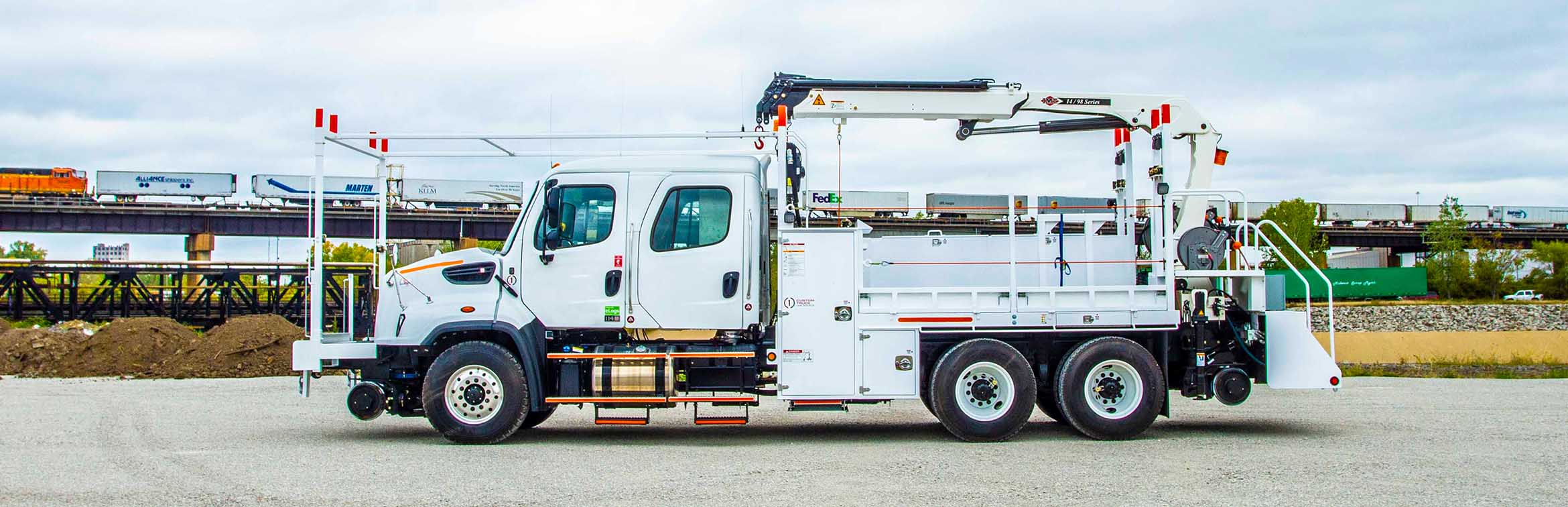
Typically, hi-rail material handlers have a 20-23 foot flatbed, at the end of which is a large, telescopic, grapple crane. They are used to handle materials like salvage, railroad ties, and other track components.
These vehicles have special dump bodies with subframes that swivel the truck bed in either direction. The rotating dump bed allows the truck to deposit its load anywhere on a 180-degree arc without having to move the vehicle itself.
Hi-rail welder trucks are designed to provide welding crews with the tools and cargo space they need to make new welds or maintain preexisting ones on rail lines.
Section crews are tasked with maintaining a certain amount of track miles. Section trucks are hi-rail vehicles that are specifically designed to haul the tools, parts, and material they need to maintain their section.
There are many custom vehicles that fall outside the classifications of the builds mentioned above. Vegetation vehicles, track geometry vehicles, reel trucks, specialized Transit/Class I builds, and many more reflect the specialized nature of the railway industry.

