


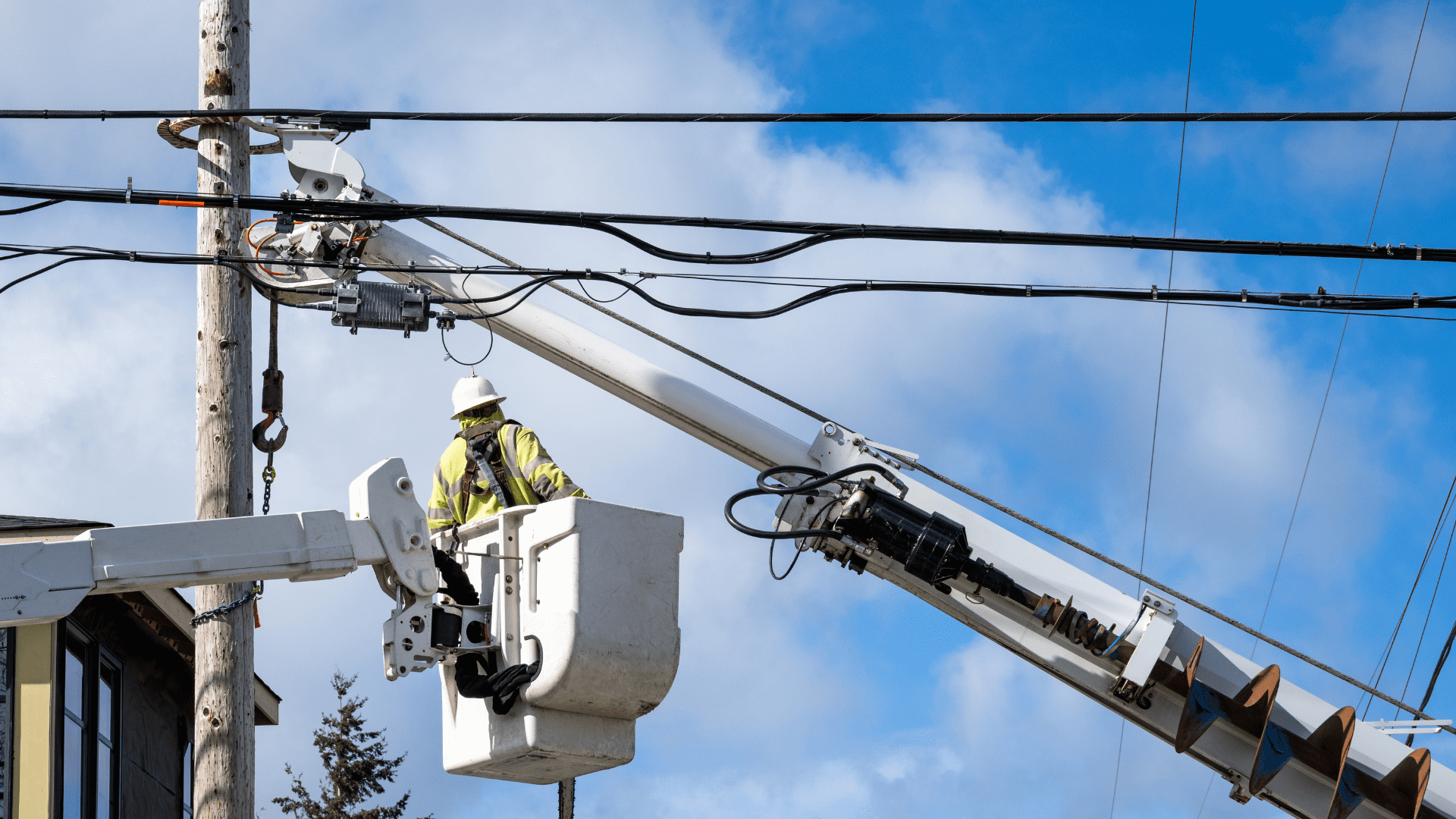
Choosing between a bucket truck and a digger derrick truck is rarely the real decision for utility crews. The harder call is matching the right configuration to the application. Bucket trucks vary by platform size, overcenter or non-overcenter reach, insulation, easement access, and truck-mounted or tracked mobility, each suited to different working conditions. Digger derricks are divided first by distribution or transmission sheave height, then by easement and terrain needs. Spec’ing the right unit means working backward from the project type, conditions, and crew, then deciding whether to buy the configurations you run daily and rent the ones you need only occasionally.
For most people in the utility industry, the difference between a bucket truck and a digger derrick truck is a given: one lifts a worker to elevated tasks, the other digs holes and sets poles. The harder question, and the one that drives a purchase, is which configuration of each unit fits the work in front of you. Transmission or distribution? Energized or de-energized? Open right-of-way or a backyard easement? The answers point to very different utility equipment.
Here’s how to think through the configurations that matter.
Bucket Trucks: Matching the Unit to the Task
Single-person vs. two-person buckets
The platform you need starts with the crew. A single-person bucket is suitable for routine inspection, maintenance, and one-operator tasks. A two-person platform carries a higher combined capacity for jobs that take a second set of hands at height, or that move more tools and materials into the air. The decision affects platform capacity, which in turn affects the boom and chassis you spec.
Overcenter vs. Non-overcenter
This is a reach decision. An overcenter boom lets the bucket travel past the center of the truck, extending side reach for positioning around obstacles, which is why overcenter units are common in utility, forestry, and construction work. A non-overcenter unit can’t cross center, but that limit rarely matters when working height is the priority. For line and equipment to work where you simply need to get up to the conductor or box, a non-overcenter unit does the job.
Insulated vs. Non-insulated
The deciding factor is whether crews work around energized lines. Insulated units use dielectric materials in the boom and bucket to guard against accidental contact and are the standard for energized utility work.
Easement (backyard) Buckets
When the jobsite is behind homes or in a tight right-of-way, a full-size unit can’t get in. Easement, or backyard, buckets are compact enough to reach confined spaces while still delivering working heights in the 53 to 64 foot range, enough reach for distribution work without sacrificing access.
Truck-mounted vs. Tracked
Truck-mounted units are the default: road-legal, fast between sites, and ideal for paved or stable ground. When the terrain turns soft, swampy, or otherwise impassable to wheels, a tracked unit spreads weight and keeps working where a truck would sink. The trade-off is transport; tracked machines move between sites on a trailer rather than under their own highway power.
Across these configurations, working heights span a wide range, from roughly 45 feet on compact articulating units to up past 150 feet on the tallest telescopic aerials, so the right spec is the one that matches the heights you hit, not the tallest unit available.
Digger Derricks: Matching the Unit to the Application
Distribution vs. Transmission
This is the primary fork. Distribution work, local poles and lines, generally calls for sheave heights up to around 50 feet. Transmission work, the larger structures carrying power across distances, needs more, starting at 60 feet and running as high as 117 feet on the largest units. Spec’ing a distribution-class digger for transmission structures leaves you short; spec’ing transmission-class reach for routine distribution work is paying for capability you won’t use.
Easement Diggers
As with buckets, tight and hard-to-access jobsites have their own class of equipment. Easement diggers, including Load King’s Outback series, are sized for confined spaces while still delivering sheave heights in the 40 to 51 foot range, enough to handle pole work where larger units can’t maneuver.
Truck-mounted vs. Tracked
The same terrain logic applies. Truck-mounted diggers move quickly between sites and handle stable ground; tracked diggers take over where the surface won’t support a wheeled unit, reaching the swampy and remote locations that would otherwise be off-limits. For digging through rock and other tough surfaces, pressure diggers are a further specialized option.
How to Spec the Right Unit
Work backward from the application. Start with the project type, transmission or distribution, since that sets your height and capacity baseline. Layer in the conditions: energized work points to insulated units, tight access points to easement equipment, and difficult terrain points to tracked machines. Factor in crew size for bucket platform capacity. Then decide to buy versus rent based on how often the configuration will run: own the units your crews use daily and rent the specialized configurations you need only occasionally.
Most utility operations end up running a mix because the work demands it. Our team at Custom Truck can help you match utility equipment to your specific applications, whether you’re outfitting for transmission builds, distribution maintenance, or the hard-to-reach jobs in between. Contact us today to find the right equipment for your fleet.
FAQ
- What’s the difference between a distribution and a transmission digger derrick? It comes down to sheave height. Distribution diggers handle local pole-and-line work with sheave heights up to 50 feet. Transmission diggers reach the larger structures that carry power over distances, ranging from 60 feet to 117 feet on the largest units. The project type sets which class you need.
- When should I choose an overcenter bucket truck over a non-overcenter unit? Choose overcenter when you need side reach to position the bucket around obstacles, common in utility, forestry, and construction work. A non-overcenter unit is the better fit when working height is the priority and you don’t need to clear the center of the truck, such as routine line and equipment access.
- Do I need an insulated bucket truck? If your crews work around energized lines, yes. Insulated units use dielectric materials in the boom and bucket to protect against accidental contact and are standard for energized utility work. Non-insulated units are built for jobs with no electrocution risk, including telecom and forestry applications.
- What are easement units, and when do they make sense? Easement, or backyard, units are compact bucket trucks and digger derricks built for tight rights-of-way and confined jobsites where full-size equipment can’t maneuver. Easement buckets reach working heights of 53 to 61 feet, and easement diggers deliver sheave heights of 40 to 51 feet, enough for distribution work without sacrificing access.
- When is a tracked unit worth it over a truck-mounted one? Choose tracked when the terrain won’t support a wheeled unit, soft, swampy, or otherwise hard-to-reach ground. Tracks spread weight and keep the unit working where a truck would sink. The trade-off is transport, since tracked machines move between sites on a trailer rather than under highway power. Truck-mounted units stay the faster, more flexible choice for stable ground.

Ready to keep your fleet moving?
Talk to a Custom Truck One Source specialist about equipment, parts, and service options built around your fleet.
Request a QuoteOr call (844) 822-5581