


If you’re in the forestry business, you already know that downtime is money lost. A chip truck might seem straightforward–chassis, body, done–but there’s way more to consider than just showing up and buying the first one you find. Here’s what actually matters.
Why Chip Trucks Matter More Than Ever
Tree trimming and removal work is booming, and chip trucks are essential for any forestry operation. You can’t survive without one. Debris gets chipped directly into your truck, but you need a reliable vehicle that can handle the load and haul it efficiently. The busier you get, the more chip trucks you may need. Plus, there’s the whole replacement market- companies constantly upgrading from worn-out equipment to newer, more capable options.
Key Decisions to Make
Size & Location Matter. Working in congested urban areas? Smaller trucks like the 11×66 give you maneuverability. If your dump location is far away, a larger truck (14×72) means fewer trips and lower fuel costs per load. Think about your typical worksite, not worst-case scenarios.
CDL vs. Non-CDL. The 14×60 and 11×66 keep you off the CDL hook, which simplifies staffing and licensing. The 16×82 requires a CDL, but the extra capacity often pays for itself on bigger jobs.
Financing & Trade-Ins. Custom Truck works with you on financing options, and if you’re upgrading from older equipment, you can recoup value through trade-ins. Check out Custom Truck’s auction and marketplace-you might get more for your old chip truck than you expect, and there are solid used options available if budget is tight.
Common Mistakes to Avoid
Undersizing is the biggest one. A chip truck that’s too small creates overwork, more frequent repairs, and constant downtime. You’ll spend more fixing a worn-out undersized truck than you would’ve on the right-sized unit from the start.
Don’t just look at purchase price. Factor in fuel costs, maintenance, and downtime. A slightly more expensive option with proven reliability saves money over five years.
Custom Truck’s Chip Truck Lineup: Find Your Fit
Custom Truck keeps three main models in stock, ready to go. Here’s what separates them:
The 11×66 is your smaller, nimble option. It comes standard on either a Ford F550 or a RAM 5500 chassis with 4×4, making it perfect for tight jobs and hard-to-reach locations. The higher rear opening accommodates taller chipper chutes while keeping the body short and maneuverable. It comes with a heavy-duty “L” toolbox package for secure equipment storage and is strong enough to pull your chipper anywhere you need it. This is your non-CDL choice if you want flexibility without licensing headaches.
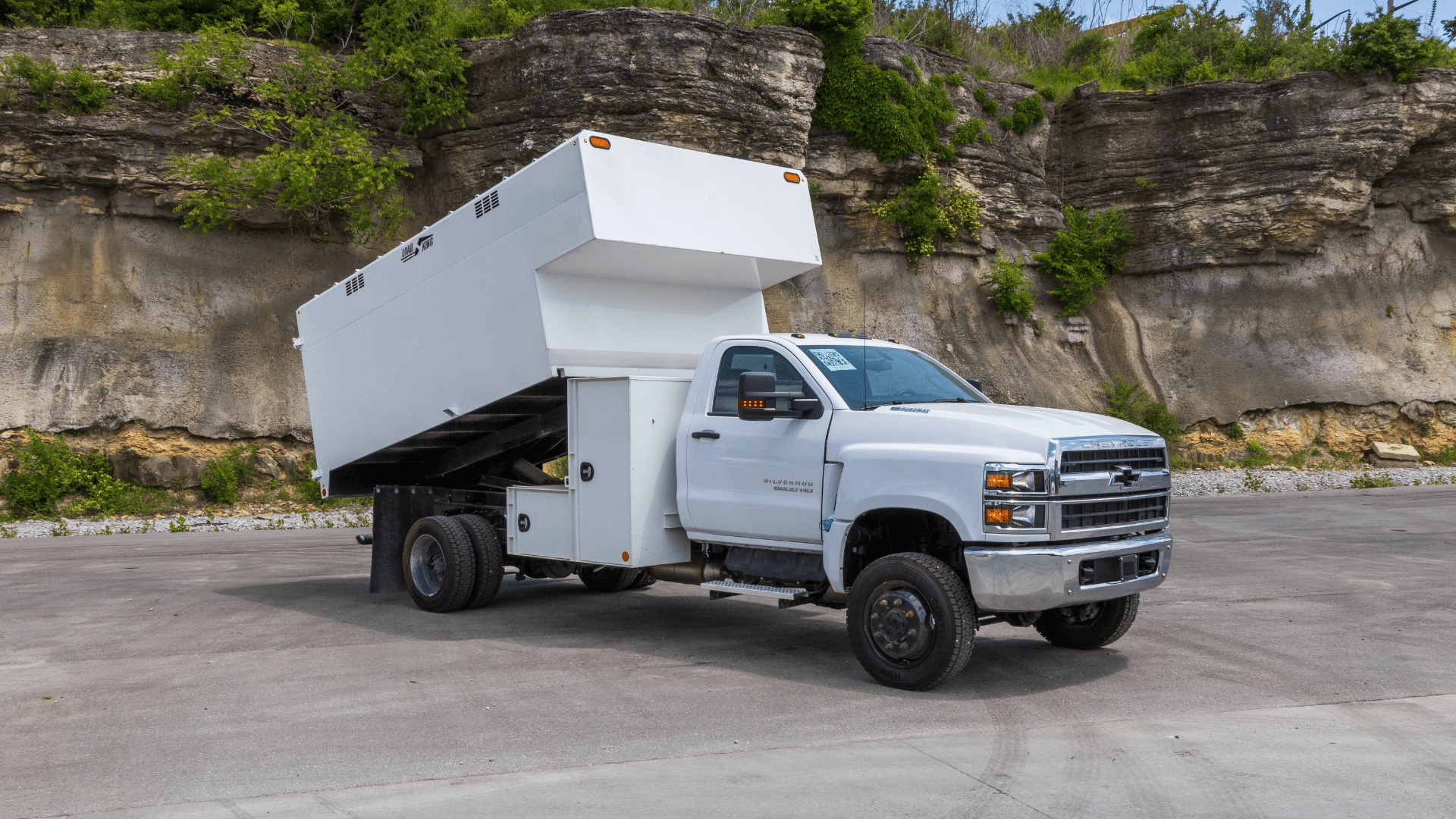
The 14×60 steps up to a Chevrolet Silverado with an approximate 18-cubic-yard capacity. That’s enough chip debris to keep you working longer on a single jobsite without constantly running back to dump. It’s designed so anyone can drive it-no CDL required-which is huge for scheduling and operations.
The 14×72 is your heavy hitter. Built on a Freightliner M2 class 6 chassis, it delivers 20-23 cubic yards of capacity. For serious, large-scale jobs, this truck means fewer trips to the dump, better productivity, and less fuel expense per chip haul. It also includes the heavy-duty “L” toolbox package.
Your Options Beyond Buying New
If you’re not ready to buy new, Custom Truck’s marketplace and auction platform lets you browse used chip trucks from other operations upgrading their fleets. You get verification of service history and sometimes solid deals.
For seasonal work or temporary capacity boosts, rental is worth considering. Why own equipment that sits idle most of the year? Rent when you need it, own what you run constantly.
The Bottom Line
Chip trucks aren’t complicated, but they deserve real thought. Consider your geography, job scale, and whether CDL logistics work for your operation. Custom Truck’s lineup-the 11×66, 14×60, and 14×72-covers the spectrum.
Ready to upgrade your fleet? Contact us to explore what Custom Truck has available and what specs match your operation.

Ready to keep your fleet moving?
Talk to a Custom Truck One Source specialist about equipment, parts, and service options built around your fleet.
Request a QuoteOr call (844) 822-5581