


Fleet readiness, not just equipment availability, decides how fast crews respond when downtime hits. The true cost of equipment downtime includes idle crews, missed billing windows, SLA penalties, and lost bid eligibility, not just repair bills. Fleets shorten time to deployment by combining preventive maintenance, regional location strategy, a balanced equipment mix, and rental and service partnerships established before the next event. Custom Truck One Source supports fleet readiness with a national rental fleet, 40+ locations across the U.S. and Canada, OEM-certified parts, and 24/7 Customer Care at (833) 246-7551.
Downtime costs more than most fleets realize and unplanned events make it worse. Learn how fleet readiness, rentals, and service support shorten time-to-deployment when it counts. Custom Truck One Source delivers the inventory, 40+ locations, and 24/7 support to keep your fleet moving.
There’s a difference between owning equipment and being ready to deploy it. Most fleets only notice the gap when something unplanned hits: a major outage, an infrastructure failure, a project that suddenly doubles in scope, or a unit that goes down at the worst possible time. In those moments, the question isn’t whether you have the right truck. It’s how quickly you can get it on site, staffed, and working.
That’s fleet readiness. And it’s where downtime quietly turns into one of the highest hidden costs in any equipment-driven operation.
What Downtime Actually Costs
The direct costs are easy to count: idle crews on the clock, missed billing windows, SLA penalties, and contract clawbacks when response benchmarks get missed. Those add up fast, but they’re rarely the full picture.
The indirect costs are where margins really erode. Reputation with utility and municipal partners shapes future bid eligibility. Crews stuck waiting on equipment don’t stay long. And every event you weren’t ready for becomes part of the calculations the next time work goes out for bid.
The metric that matters isn’t equipment availability on paper. It’s time to deploy how fast a unit goes from yard to job site – fueled, inspected, and staffed.
Fleet Readiness, Broken Down
Three factors decide that timeline.
- Maintenance posture: how well your fleet is kept in service-ready condition
- Location strategy: where your equipment is staged relative to the work
- Equipment mix: whether you have the right units, not just available units
Maintenance posture
Fleets running on reactive maintenance pay twice – once when a unit goes down, and again when surge demand hits, and the bench isn’t deep enough to cover it. Consistent preventive service isn’t just about uptime in normal conditions; it’s what protects capacity when the call volume spikes.
Location strategy
Drive time is response time. Regional footprint, staging proximity to expected work zones, and access to support infrastructure all factor in. A unit two states away is a unit that arrives late, which is why Custom Truck’s 40+ branch locations across the U.S. and Canada were built to put service, parts, and inventory closer to where the work actually happens.
Equipment mix
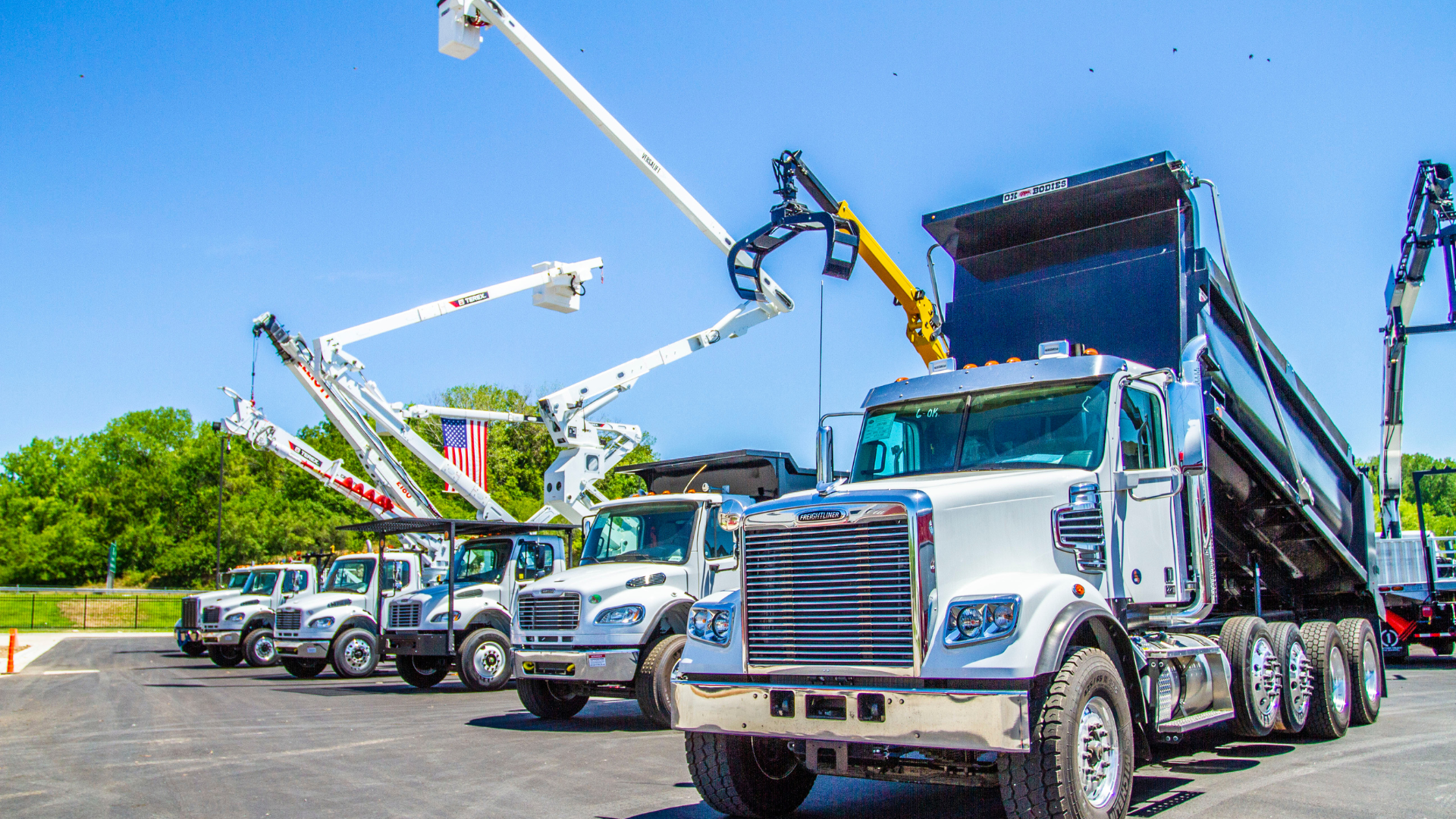
The right unit beats the available unit. Bucket trucks, digger derricks, grapple trucks, dump trucks, and trailers each solve specific problems, and a fleet weighted too heavily toward one category creates bottlenecks the moment demand shifts. A balanced mix is what keeps deployment timelines tight when conditions change.
Where Rentals, Inventory, and Service Support Come In
Even well-built fleets hit ceilings. Demand surges, multi-region events, or unexpected unit failures can outpace what any single fleet keeps on hand. That’s where outside support changes the response timeline and where we’ve built our model to plug in.
Our rental fleet acts as a strategic alternative, scaling capacity up without the capex commitment of permanent additions. For utility contractors, vegetation management crews, and infrastructure teams, the ability to bring in additional units for the duration of an event and return them when the work normalizes is often the difference between meeting a contract window and missing it.
National inventory access matters for the same reason. When local supply is tapped, the fleets that recover fastest are those working with partners who can pull from stock across multiple regions rather than waiting on builds. Our new and used inventory is positioned across that 40+ location footprint specifically so units can move when and where they’re needed.
And once equipment is deployed, service support keeps it running. Our 24/7 Customer Care Call-In Center connects you directly to trained support staff for technical advice, priority service scheduling, and parts sourcing. Mobile technicians come to the job site when equipment can’t be brought off-site, and our online parts store keeps OEM-certified components flowing without phone tag or middlemen.
That’s the benefit of building rentals, sales, parts, and service under one roof, so fleets don’t have to stitch together coverage during the moments that matter most.
What to Evaluate Before the Next Event
A short gut check for any fleet manager:
- Do you know your current time-to-deployment baseline – not best case, but average?
- Where are your single points of failure? One yard, one mechanic, one unit type?
- Who’s your rental and service partner before you need them, and have you actually tested that relationship?
The fleets that respond fastest aren’t the ones that improvise well. They’re the ones who built readiness into the operation before the call came in.
Don’t wait until the next event to find out where your readiness gaps are. Contact our team to talk through rentals, service support, and inventory access built to keep your fleet moving when it counts.
FAQ
What is fleet readiness? Fleet readiness is the combined state of maintenance, location, equipment mix, and support infrastructure that determines how quickly a fleet can deploy units when needed.
How much does equipment downtime cost per day? Costs vary by industry and equipment type, but most operators underestimate the figure when indirect costs, idle crews, missed contract windows, and reputational impact, are included alongside direct repair and revenue loss.
How do rentals improve emergency response time? Rentals add flex capacity without long-term capex, allowing fleets to scale up during surge events and return units when demand normalizes.
What should fleets evaluate before peak season? Time-to-deployment baselines, single points of failure, and rental and service partner relationships, established before the event, not during it.

Ready to keep your fleet moving?
Talk to a Custom Truck One Source specialist about equipment, parts, and service options built around your fleet.
Request a QuoteOr call (844) 822-5581