


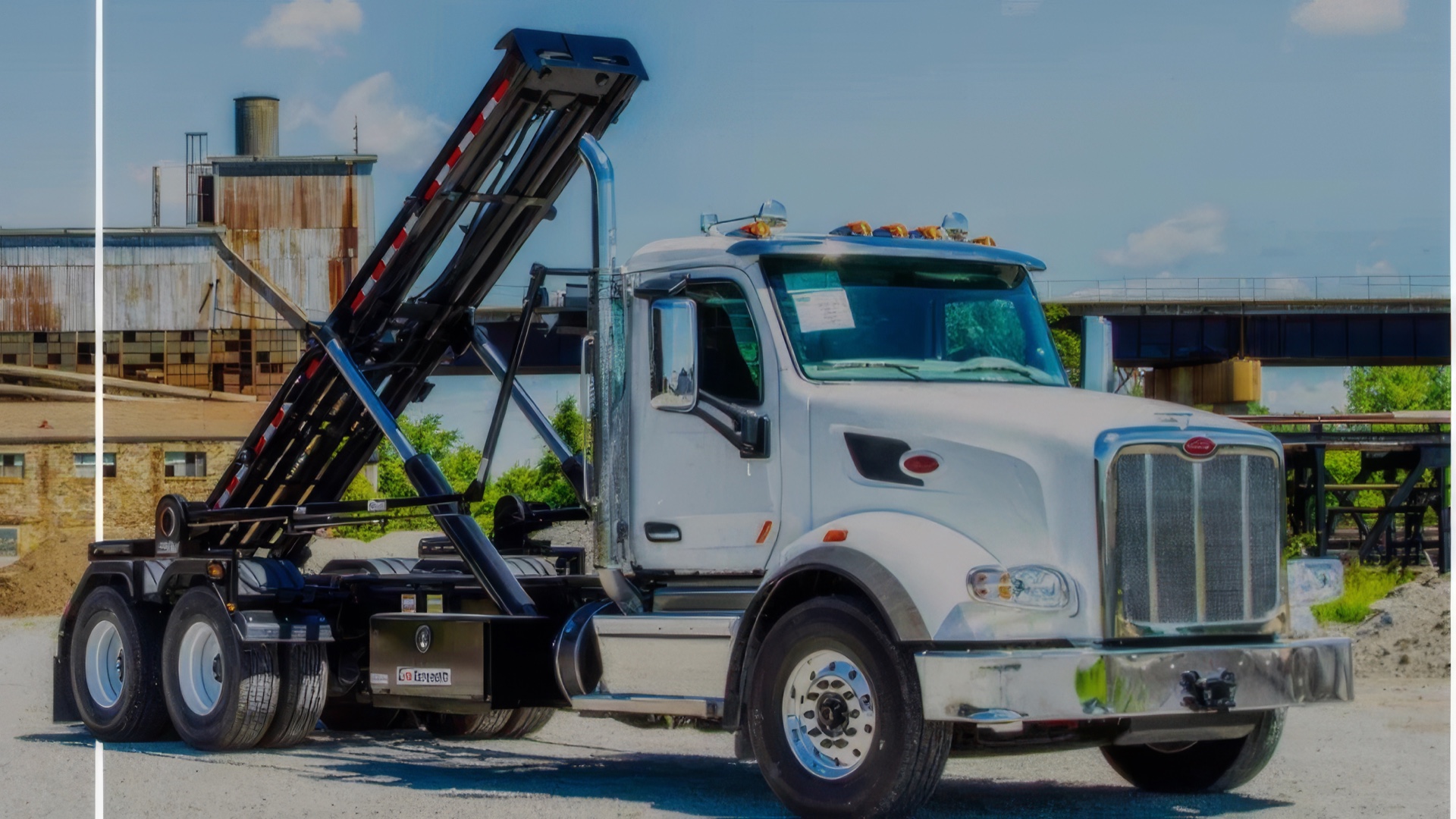
Refuse fleets operate one of the most demanding duty cycles in commercial trucking: high stop frequency, heavy payloads, hydraulically intensive collection work, and early dispatch windows, all under tight municipal contract margins. This article breaks down three operational levers leading fleets are using in 2026 to reduce costs and improve performance: body configuration and automation, electrification decision-making, and data-driven route optimization.
Waste collection doesn’t get much attention as a technology story. But the modern refuse truck is one of the most operationally complex vehicles on the road, and the fleets running them are making increasingly sophisticated decisions about equipment, powertrains, and data systems to protect margins and meet service demands.
Three trends are driving that shift in 2026.
Body Configuration Sets the Efficiency Ceiling
Before any technology layer can perform, the equipment has to be matched to the route. Automated side loaders (ASLs), rear loaders, and front loaders aren’t interchangeable. Each is built for a specific combination of route density, waste stream, and crew model.
A well-spec’d ASL can compact municipal solid waste at 800–1,000 lbs per cubic yard and service up to 1,200 homes per day with a single operator, the largest labor cost advantage the format offers over rear loaders, which typically require two to three crew members. But ASLs carry significantly more hydraulic complexity, and teams without strong hydraulic troubleshooting experience take on real downtime risk. Rear loaders remain the most cost-effective option on mixed or irregular routes where consistent cart placement can’t be guaranteed.
Compaction cycle counts, not odometer readings, are the leading indicator of body wear on high-frequency residential routes. That distinction matters when setting PM schedules. For fleets operating in dense urban or mixed-use areas, noise output is an additional spec consideration; modern hydraulic system design and cab insulation improvements have meaningfully reduced operator noise exposure and community impact compared to older equipment generations.
Automation is a layer on top of that foundation. Battle Motors’ Fortris AI platform, launched at WasteExpo 2025, processes around 2,000 messages per second from the truck’s scan bus, flagging brake heat stress, unsafe driver behavior, and potential mechanical issues in real time to both the driver and fleet manager simultaneously. The practical payoff isn’t just safety: automated systems generate the component-level data that makes predictive maintenance possible. Without that data layer, PM scheduling stays reactive. AI-driven predictive analytics are now playing a significant role at waste management companies, allowing fleets to foresee potential vehicle issues before they cause downtime rather than reacting after the fact.
Electrification: Matching Powertrain to Duty Cycle
The stop-and-go pattern that destroys diesel fuel economy is actually favorable for electrification. In a BEV refuse truck, the battery powers both the drivetrain and the hydraulic compactor via an electric PTO, eliminating the need for the engine to idle during collection. Frequent stops become opportunities to recover regenerative braking energy rather than waste fuel.
The routes best suited for immediate BEV deployment are urban residential ASL routes with depot return, consistent stop density, and daily mileage under 150 miles. The operational constraint that gets underweighted isn’t battery weight. For short-haul routes, BEV payload capacity is nearly equal to diesel equivalents, according to analysis from Lux Research. The real planning variable is the ePTO energy budget: driving and compaction draw from the same battery, which means a high-compaction-intensity route burns energy differently than a lower-density run of equivalent mileage.
On charging logistics, most electric refuse trucks charge overnight on Level 2 infrastructure, and the 8–12 hour overnight window is sufficient for standard residential routes. The dispatch risk is operational, not technical. Fleets that underestimate depot load management will face trucks not ready at a 4 a.m. departure. Royal Waste Services’ Mack LR Electric, deployed in early 2025, collected over 600 tons of waste in its first two months without a single day of downtime, demonstrating that the operational challenges are manageable in real-world urban conditions. The shift to electric also offers noise-reduction benefits, particularly on early-morning residential routes, where municipal noise ordinances and community complaints are a persistent operational concern for haulers running diesel equipment.
The economics are moving in a clear direction. Battery electric refuse trucks are projected to reach total cost of ownership parity with diesel as early as 2026, with BEV potentially representing 63% of new refuse truck sales by 2030 if incentive structures hold. For fleets not ready for full BEV deployment, CNG offers meaningful emissions reductions with established refueling infrastructure, while renewable natural gas sourced from landfill methane can serve as a viable transitional configuration as charging infrastructure scales.
Route Optimization: The Highest-ROI Technology in the Fleet
Refuse trucks average 2.5 MPG with roughly 50% idle time, the worst fuel economy of any commercial vehicle category. Every mile eliminated from a route yields proportionally greater fuel savings than the same reduction would for any other fleet type. According to Waste360, route optimization technology has helped waste and recycling haulers save significant time and money, with real-world implementations delivering measurable mileage reductions across municipal and private fleets.
Static routing can’t account for real-world variability. AI-enhanced systems build constraints like school zone time windows, bridge height and weight limits, and historical traffic patterns directly into the algorithm, keeping trucks on safe, compliant paths without dispatcher intervention. Dynamic mid-day re-routing adds another layer: if a truck goes down mid-route, the system can redistribute remaining stops across active units in real time rather than waiting for manual dispatcher intervention.
One of the most underappreciated constraints in refuse routing is the timing of disposal sites. A route that sequences stops in theoretically optimal mileage order but delivers the truck after landfill or transfer station cut-off hours forces a second trip. Sophisticated route optimization works backward from those windows, sequencing stops to arrive with a full load rather than just the shortest path.
Advances in route optimization software now allow for real-time updates to manage emergencies and adjust routes mid-collection, a flexibility that static scheduling can’t match. The fleets seeing the strongest results are those running purpose-built waste platforms, not generic fleet software adapted from other industries that can’t account for stop-density patterns, container tracking, or hydraulic maintenance intervals.
Equipment Is the Foundation
Technology trends only deliver results when the underlying equipment can support them. A telematics platform can’t compensate for a compact body mismatched to the route density. BEV dispatch efficiency depends on ePTO and charging compatibility. Route optimization ROI requires trucks that stay on route.
When replacing or expanding refuse units, fleet managers should evaluate body type relative to route and waste stream, compaction ratio and cycle rating, hydraulic serviceability, telematics readiness, and alternative fuel or electric PTO compatibility. Custom Truck One Source carries new, used, and rental waste and refuse equipment, a practical option for fleets modernizing in stages or evaluating lower-capital entry points to newer configurations.
FAQ
- What is the most cost-effective refuse truck body type for residential collection? Automated side loaders (ASLs) are generally the most cost-effective option for high-density residential routes, servicing up to 1,200 homes per day with a single operator. However, rear loaders remain the better fit on mixed or irregular routes where consistent cart placement can’t be guaranteed. The right choice depends on route density, waste stream, and your fleet team’s maintenance capabilities.
- Are electric refuse trucks viable for daily fleet operations? Yes, particularly on urban residential routes with depot return and daily mileage under 150 miles. Real-world deployments have demonstrated strong uptime and consistent collection performance. The key planning variables are ePTO energy budgeting across compaction cycles and overnight charging logistics, not payload weight, which is nearly equivalent to diesel for short-haul applications.
- How does route optimization reduce operating costs for waste fleets? Refuse trucks average 2.5 MPG with roughly 50% idle time, meaning every unnecessary mile costs significantly more than it would for any other fleet type. AI-enhanced route optimization reduces total miles driven by building real-world constraints like school zone windows, bridge restrictions, and historical traffic into the sequencing algorithm. Fleets also benefit from dynamic mid-day re-routing when trucks go down and from sequencing that accounts for disposal site cut-off times, eliminating costly second trips.
- What is predictive maintenance and how does it apply to refuse fleets? Predictive maintenance uses real-time vehicle data from telematics and onboard diagnostic systems to identify component wear patterns before they cause failures. For refuse fleets, this is especially important for hydraulic systems, compaction cycle counts, and lift arm components on ASLs, all of which degrade faster than odometer readings suggest. Automated platforms flag these issues weeks before a breakdown, turning potential roadside emergencies into scheduled shop visits.
- What should fleet managers evaluate when spec’ing or replacing refuse equipment? The most important variables are body type relative to the route profile and waste stream, compaction ratio and cycle rating, hydraulic system serviceability, telematics readiness for OEM or third-party integration, and alternative-fuel or electric PTO compatibility. Mismatching body type to route is one of the most common and costly spec errors in refuse fleet procurement.

Ready to keep your fleet moving?
Talk to a Custom Truck One Source specialist about equipment, parts, and service options built around your fleet.
Request a QuoteOr call (844) 822-5581