


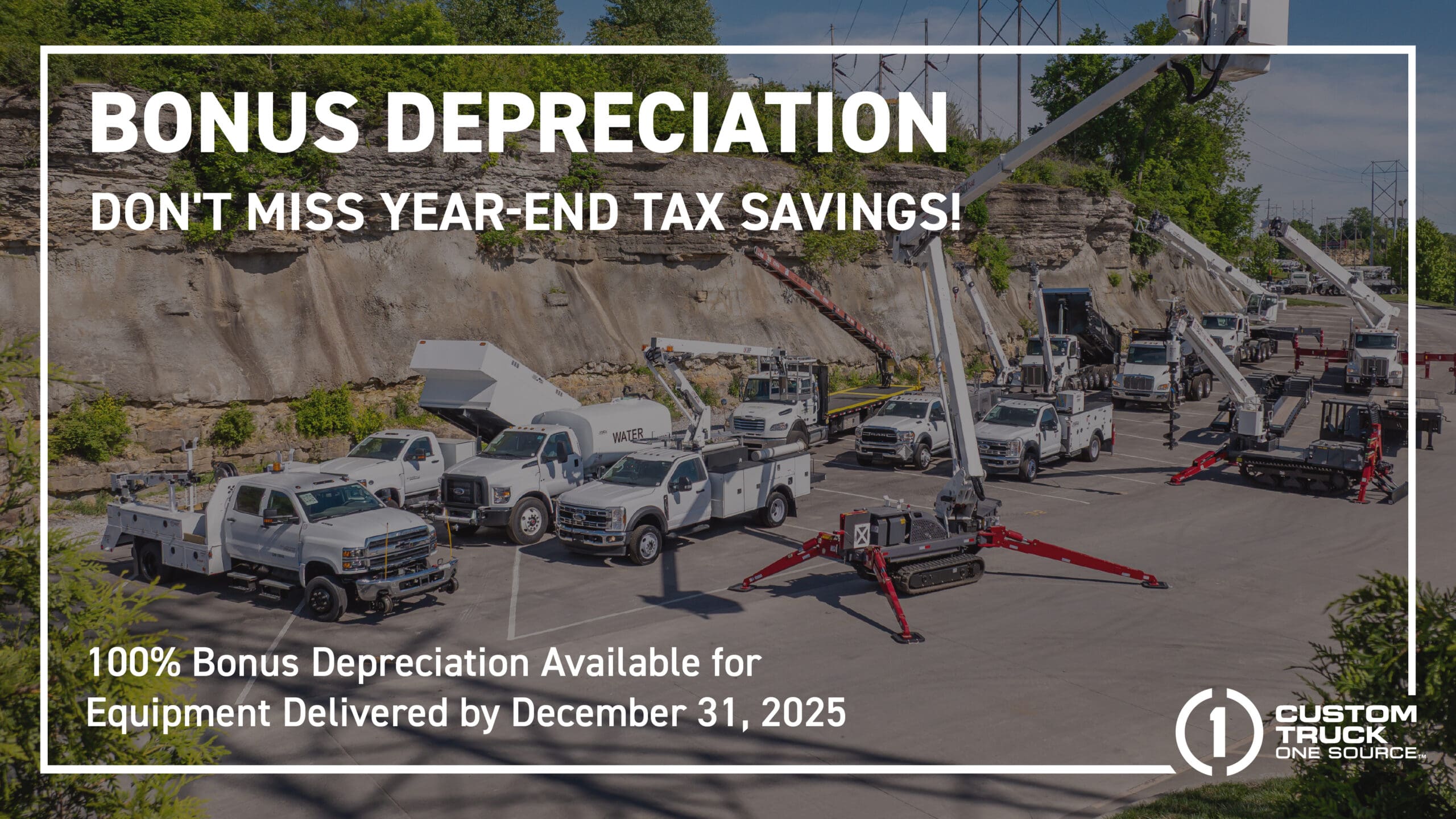
Take delivery before December 31, 2025, and write it off on your 2025 taxes. More savings now, more cash ready for 2026!
The One Big Beautiful Bill Act (OBBBA) has restored 100% bonus depreciation on qualifying new and used equipment; and that’s game-changing news for truck buyers. Customers can immediately deduct the full cost of new and used trucks, machinery, and upfits placed in service after January 19, 2025. Buyers can claim the full depreciation the same day the truck is purchased, on unlimited truck purchases, meaning instant and limitless tax savings that directly improve cash flow for truck buyers. As of now, this incentive will continue for the following tax years. Please consult your tax and legal advisors for more information.
How 100% Bonus Depreciation Works
Bonus depreciation is unlimited for all property or qualifying equipment that has a recovery period of 20 years or less. This means whether you’re purchasing a single work truck or outfitting an entire fleet, every vehicle qualifies for immediate, full tax deduction.
Here’s the math that matters: Purchase a $100,000 truck, and if you’re in the 21% tax bracket, you’ll see immediate tax savings of $21,000 – reducing your net cost to just $79,000. Multiply that across multiple vehicles, and the savings become substantial.
The legislation, signed into law on July 4, 2025, permanently reinstates 100% bonus depreciation for qualified property acquired and placed in service after January 19, 2025, reversing the phase-down that would have limited deductions to just 40% in 2025.
Timing: Why January 19, 2025 Matters
The OBBBA’s effective date of January 19, 2025 creates a clear dividing line for tax benefits. Property acquisitions for which a written binding contract was entered into before January. 20, 2025, is treated as acquired on written binding contract date, which may cause otherwise eligible property to not be eligible for the expanded 100% bonus depreciation. In summary, equipment purchased before January 19, is not eligible.
Enhanced Business Benefits Beyond Depreciation
Better interest coverage: The Act expands allowable business interest deductions by redefining “adjusted taxable income” to exclude depreciation; giving financing or leasing customers more relief. This improvement makes financing more attractive and provides additional cash flow benefits for businesses choosing to finance their truck purchases.
The OBBBA also increases the Section 179 expensing limit to $2.5 million, with a new phaseout threshold of $4 million, providing even more flexibility for businesses making substantial equipment investments.
Custom Truck’s Competitive Advantage
With Custom Truck’s unsurpassed inventory of new and used trucks available for immediate delivery throughout the U.S., Custom Truck One Source is the one-stop provider for maximizing these incentives. Our nationwide reach ensures you can take advantage of these tax benefits regardless of your location, while our extensive inventory means you won’t have to wait months for delivery.
Whether you need specialized upfits, work trucks, or fleet vehicles, our complete range of new and used options all qualify for the full 100% bonus depreciation benefit. This gives you maximum flexibility in building the exact fleet configuration your business requires while capturing the maximum tax advantage.
Don’t Miss This Opportunity
The combination of permanent 100% bonus depreciation, enhanced business interest deductions, and Custom Truck’s immediate delivery capability, creates an unprecedented opportunity for fleet expansion and equipment upgrades. Take delivery before December 31 and write it off on your 2025 taxes. More savings now, more cash ready for 2026!
Contact us today to explore our inventory and discuss how the OBBBA can transform your equipment acquisition strategy. Our team understands both the tax implications and the operational requirements to help you maximize these valuable incentives.
For more information on the OBBBA: https://www.whitehouse.gov/obbb/
**Disclaimer: This material has been prepared for general informational purposes only and is not intended to provide tax or legal advice. You should consult your own tax and legal advisors.

Ready to keep your fleet moving?
Talk to a Custom Truck One Source specialist about equipment, parts, and service options built around your fleet.
Request a QuoteOr call (844) 822-5581