


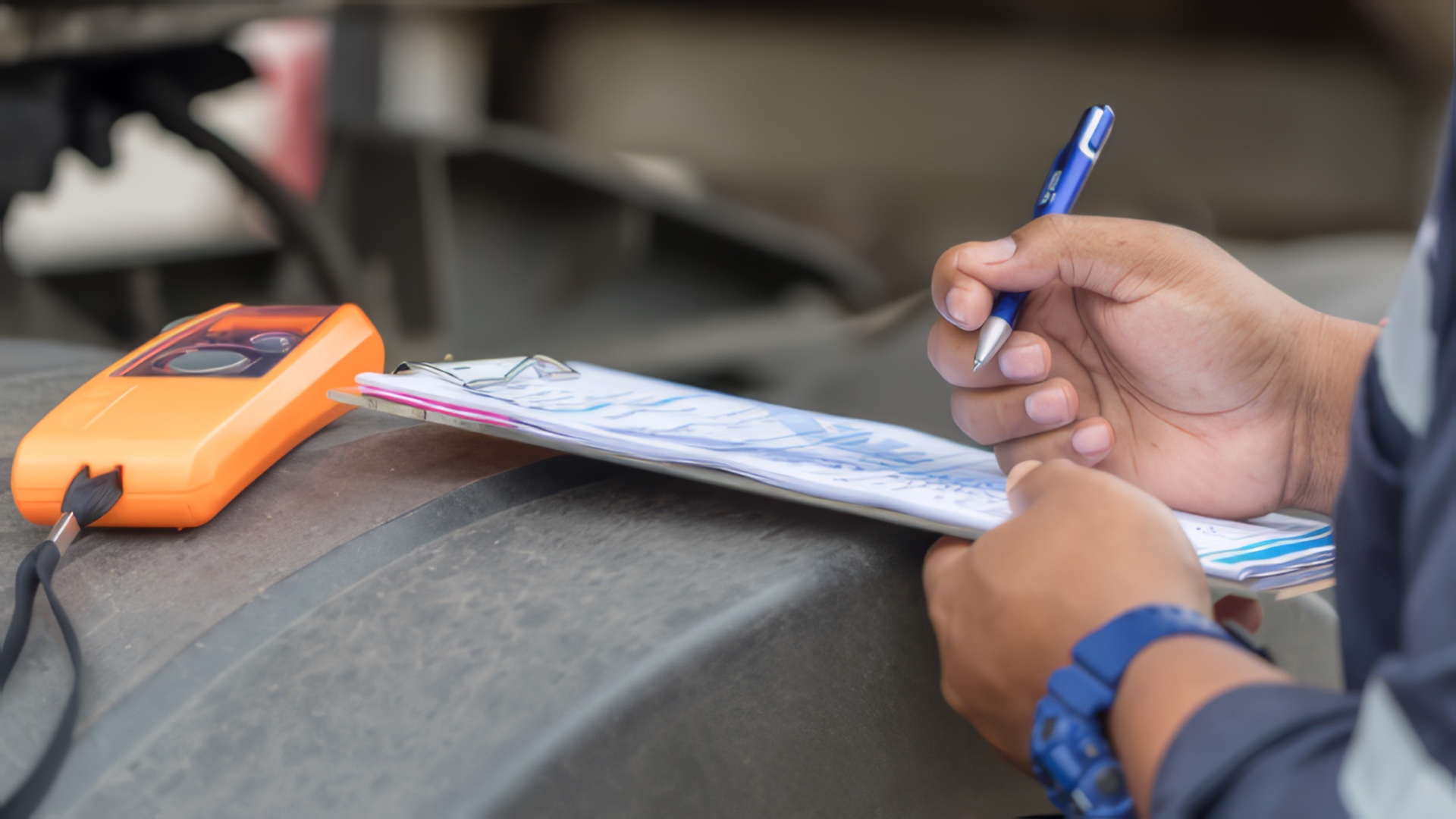
When your business depends on specialized equipment, especially in utility, construction, and infrastructure environments, there’s no room for surprises once that equipment hits the jobsite. Downtime costs money. Safety risks impact your team. And even small issues can slow down productivity when timelines are tight.
That’s why pre-delivery inspection (PDI) processes aren’t just a final step; they’re a critical part of ensuring equipment performs exactly as expected from day one.
For companies that rely on trucks and heavy equipment, a strong PDI process delivers:
- Confidence in performance from the moment equipment arrives
- Reduced downtime and heavy equipment service interruptions
- Improved operator safety and compliance
- Faster jobsite readiness and productivity
At Custom Truck One Source, we view the pre-delivery inspection as more than a checklist; it’s a core part of how we deliver on our promise to be a true single-source partner. Here’s an inside look at our process and how we ensure your equipment is delivered exactly how you ordered it.
Inside Custom Truck One Source’s Pre-Delivery Inspection (PDI) Process
Delivering equipment that meets exact customer specifications requires more than assembly. It requires a structured, multi-stage quality assurance process.
Our PDI process is designed to ensure that every unit is:
- Built correctly
- Fully functional
- Compliant with all regulations
- Aligned with customer-specific requirements
Here are the steps we take to ensure trucks are delivered completely aligned with customer specifications.
1, Verifying Unit Information: Starting with Accuracy
Every successful delivery starts with getting the details right.
Before any inspection begins, we confirm that all critical unit information is accurately captured and tied to the equipment. This includes key identifiers like VIN, work order details, and equipment specifications.
Why this matters:
- It prevents downstream errors
- It ensures traceability throughout the process
- It aligns the build with customer expectations from the start
No equipment moves forward without a complete and verified unit record, ensuring the process starts with correct information.
2. Road Testing: Real-World Performance Validation
Building the unit is just the beginning. We put it to the test before it reaches your team.
Each unit undergoes a structured road-testing process that includes:
- A pre-trip DOT walkaround inspection
- A full road test under real-world operating conditions
- A post-trip inspection and documentation review
During this phase, we verify that all major systems, from braking and steering to acceleration and handling, are functioning properly.
If anything doesn’t meet our standards, it’s corrected and re-verified before moving forward.
Why this matters:
- We can identify any issues before delivery
- We can confirm real-world drivability and performance
- It reduces the risk of early-life equipment failures
3. DOT & Regulatory Compliance: Meeting Industry Standards
Compliance isn’t optional – it’s essential.
We ensure every unit meets all applicable DOT and regulatory requirements, including:
- Current inspection certifications
- Proper labeling and decals
- Required documentation and reporting
- Equipment-specific compliance (such as aerial or crane inspections when applicable)
Why this matters:
- You can trust that your fleet is compliant from day one
- It reduces liability and risk
- It ensures equipment is ready for immediate deployment
4. Final Pre-Delivery Inspection: The Ultimate Quality Check
The final stage is where everything comes together.
This comprehensive inspection acts as the last quality gate before delivery, covering:
- Chassis and operational performance
- Fluid levels, torque checks, and system functionality
- Customer-specific configurations and add-ons
- Documentation and operator materials
- Fit and finish – inside and out
Nothing is overlooked, from ensuring switches function correctly to confirming the unit is clean, damage-free, and fully ready for use.
Only after all checks are complete is the unit marked ready for delivery.
The Bottom Line for Your Business
Our pre-delivery inspection process is designed with one goal in mind: delivering equipment that performs exactly as expected, without delays, surprises, or compromises.
For our customers, that means:
- Faster time to productivity
- Greater confidence in equipment performance
- Reduced service interruptions early in the lifecycle
- A partner that prioritizes quality and reliability
It’s one more way we support your team, not just with equipment, but with solutions built to perform.
Custom Truck One Source is committed to being your single source partner for equipment – from purchase, to delivery, and support. Shop our inventory today.
Summary: Pre-Delivery Inspection Checklist for Heavy Equipment
- Verify VIN and documentation
- Inspect fluid levels and leaks
- Test brakes, steering, and acceleration
- Perform DOT walkaround inspection
- Confirm safety equipment and labeling
- Validate customer-specific configurations
- Conduct full road test
- Complete final inspection and documentation
FAQ
What is a pre-delivery inspection (PDI)?
A pre-delivery inspection (PDI) is a comprehensive process that verifies equipment is fully functional, compliant, and aligned with customer specifications before it is delivered.
Why is PDI important for heavy equipment?
PDI ensures heavy equipment is job-ready, reduces the risk of early failures, improves safety, and minimizes downtime once the unit is in operation.
How long does a pre-delivery inspection take?
The timeline can vary depending on the complexity of the unit and configuration, but each stage is designed to ensure accuracy, compliance, and performance before delivery.
What happens if an issue is found during inspection?
Any issue identified during the process is corrected and re-tested before the unit can advance to the next stage or be approved for delivery.
Does PDI include customer-specific requirements?
Yes. Every unit is verified against customer-specific configurations, add-ons, and functional requirements to ensure it meets the exact needs of the business.
What industries benefit most from PDI?
Pre-delivery inspections are critical for industries like utility, construction, infrastructure, forestry, and telecommunications – where equipment uptime, safety, and compliance directly impact jobsite performance.
How does this benefit my team?
A strong PDI process means your equipment arrives ready to work, helping your team stay productive, safe, and on schedule from day one.

Ready to keep your fleet moving?
Talk to a Custom Truck One Source specialist about equipment, parts, and service options built around your fleet.
Request a QuoteOr call (844) 822-5581