Author Archives: Matt Volodzko

Transmission Work: The Equipment You Need to Meet Demand

Transmission Work: Booming and Growing — The Equipment You Need to Meet Demand

Transmission infrastructure is rapidly expanding. Utility contractors and project managers are seeing more opportunities than ever as the U.S. invests in strengthening the grid and connecting renewable energy sources. This growth brings both promise and challenges.

Transmission line work requires a diverse fleet of specialized equipment to meet the demands of large-scale projects. Success depends on having skilled crews, the right tools and supplies and the best equipment for various applications. By understanding the growth and demands of the transmission sector, you can choose the right equipment to stay competitive, keep projects on track and improve team productivity.

Market Drivers: Why Transmission Work Is Expanding

Several factors are fueling the surge in transmission projects, and each one underscores the importance of preparing your fleet. Market drivers include:

  • Grid modernization: The country’s aging electrical grids are a top priority for upgrades. Modern systems will improve reliability and reduce outages.
  • Aging infrastructure replacement: Aging equipment that cannot be upgraded must be replaced entirely to meet growing demand. Replacing infrastructure will also ensure compliance with evolving standards.
  • Renewable energy integration: Transmission systems are being expanded to integrate growing renewable energy sources, including wind and solar farms. This will require new transmission lines across varied terrains.
  • Infrastructure investment: Federal and state initiatives are channeling billions of dollars into energy infrastructure. This creates opportunities for contractors to tackle larger jobs.

Equipment Demands of Transmission Projects

Transmission infrastructure projects are complex and multifaceted. Your crew should be prepared to handle a variety of tasks and materials, often in challenging environments. Key operational equipment includes:

  • Lifting solutions for towers, transformers, and heavy equipment.
  • Aerial access equipment for work at specific heights.
  • On-site service and support vehicles for crew productivity.
  • Material handling trucks for hauling and transport.
  • Mobile workshops for field repairs and maintenance.

Service Trucks and Mobile Support

On-site service trucks keep your projects running smoothly by maintaining equipment in the field. They help reduce downtime and optimize timelines. The most common options are:

Aerial and Access Equipment

Elevated work is constant in transmission line construction. Electrical utility trucks provide you access to specific heights and overhead structures. Key equipment includes:

Crane and Heavy Lifting Solutions

Heavy lifting is central to transmission infrastructure projects. They require equipment capable of handling large components. Essential options include:

Fleet Versatility

A versatile support fleet helps you cover critical aspects of transmission projects,  from logistics to site preparation. Important vehicles you should consider are:

Transmission-Ready Product Portfolio From Custom Truck One Source

Custom Truck One Source is your single source of utility contractor equipment. To support every critical phase of transmission line work, we provide the following solutions:

  • Aerial equipment: Our lineup includes a variety of track-mounted lifts for off-road access and a collection of insulated aerial trucks for energized line work.
  • Heavy lifting solutions: We provide hydraulic truck cranes for long-reach tower installation and knuckle boom cranes for precise material placement in tight spaces.
  • Service and support trucks: Our fleet features lube trucks for on-site fluid management and a selection of water trucks for dust control, soil compaction and fire prevention.
  • Versatile fleet options: We supply vocational trucks for specific applications and a range of pole trailers for transporting long utility poles.

With Custom Truck One Source, you can access a complete range of equipment tailored to your construction needs. Work with us to streamline procurement, maximize fleet-wide compatibility, and prepare your crew for various jobs.

Achieve Transmission Success With Custom Truck One Source

Choose Custom Truck One Source as your single-source partner for high-quality equipment, tools and services. Equip your crew for transmission success and contact us today.

Side Dump Trailers are the Workhorses of Construction and Hauling

Side Dump Trailers: The Unsung Workhorses of Construction and Hauling

Moving heavy materials on a busy jobsite can be complex. Speed and efficiency are expected, and equipment should support your crew’s productivity. While end dump and bottom dump trailers are familiar sights, side dump trailers are the unsung workhorses of construction and hauling. Side dump trailers are purpose-built for demanding applications, delivering reliable stability, rapid dump cycles and rugged durability to help crews keep projects moving.

Let’s explore the advantages of side-dump trailers, different trailer options, and how year-end opportunities can bolster your fleet.

The Hauling Versatility of Side Dumps

Side-dump trailers adapt to a wide range of hauling needs. They often outperform other trailer types in specific applications, including:

  • Aggregate and sand: Side-dump trailers are effective for hauling aggregate and sand, offering controlled dumping and the ability to windrow material. Their stability on soft ground, which is common in pits and quarries, ensures consistent performance.
  • Demolition debris: The trailers feature a wide, durable tub and a robust frame for handling bulky, uneven loads with reduced risk of jamming. These features make side dumps strong candidates for demolition trailers.
  • Dirt and excavation: Side-dump trailers enable fast cycle times and on-the-move dumping, accelerating earthmoving and roadbuilding projects. As general construction trailers, side dumps help reduce downtime between hauls.

The Load King Advantage

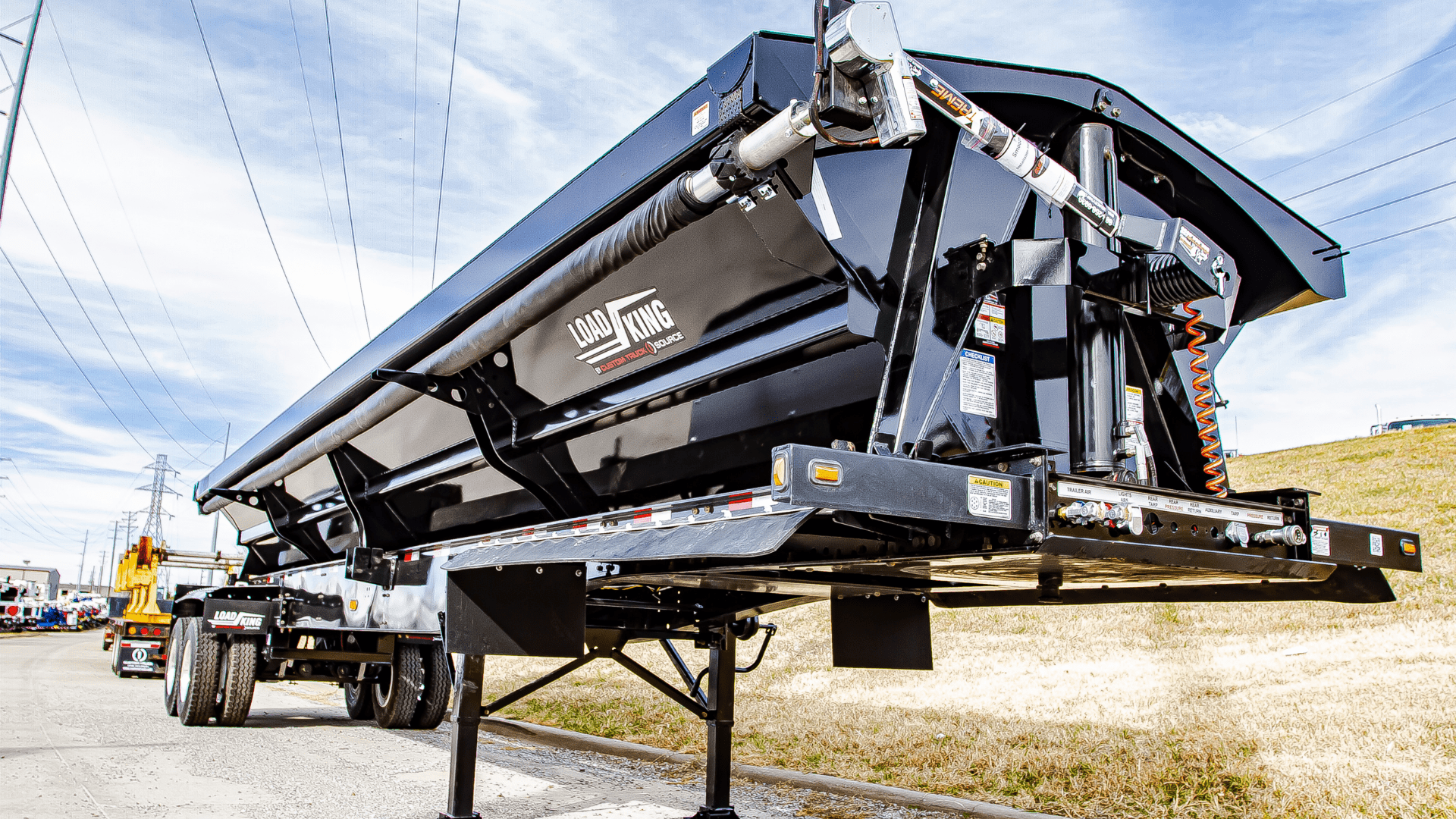
Load King is one of the leading brands for heavy equipment. The brand’s side dumps are engineered to boost productivity and deliver long-term value. The advantages of Load King side dump trailers include:

  1. Roll stability: Load King side dumps have a low center of gravity, reducing rollover risk on uneven terrain. The trailer’s design also accommodates loading with skid steers and other smaller, agile machines.
  2. Rapid dump cycles: Shorter dump times mean less waiting between hauls. Your crew can move more material per shift, improving overall project efficiency.
  3. Hydraulic efficiency: Load King’s hydraulic system is built for consistent output. Its responsiveness helps operators maintain steady cycles throughout the day, enhancing throughput.
  4. Tub durability: The brand’s tubs are constructed with high-strength material, resisting impact and abrasion from riprap, concrete and other heavy materials. This durability supports a longer service life under demanding conditions.

The Load King three-axle side dump trailer is a versatile option for general use, while the heavier-duty four-axle model provides added capacity for maximum payloads. In addition, Load King’s product range is proactively customized to fit your unique needs.

Ease of Operation and Maintenance

Performance in the field is only part of the equation. For fleet managers and operators, day-to-day usability and long-term maintenance are equally important.

Side dump trailers are built with simplicity in mind, leading to significant benefits:

  • Fewer moving parts: Side dumps have fewer components, which means fewer potential points of failure and easier troubleshooting.
  • Simplified hydraulics: The hydraulic systems of these trailers are designed for straightforward operation and reliability, reducing long-term maintenance requirements.
  • Longevity and lower costs: Their durable construction prolongs equipment life, lowering the total cost of ownership.

Competitive Comparison of Dump Trailers

Knowing where side dumps fit within the broader trailer landscape maximizes the benefits of ownership. By comparing them with other trailer options, you can see where they add the most value to your fleet.

Side Dump Trailers vs. End Dump Trailers

End dump trailers perform well in straightforward hauling tasks, making them a popular choice for many fleets. They are effective for transporting large volumes of material in a single load. Compared to side-dump trailers, end-dump trailers have a higher center of gravity. This means side dumps are better suited to uneven terrain and off-road conditions. The added stability provides more flexibility to specific job site requirements.

Side Dump Trailers vs. Bottom Dump Trailers

Bottom dump trailers are well-suited for windrowing applications, where spreading material evenly across surfaces is the priority. These trailers are often used in roadbuilding projects that require the precise placement of aggregates. Side dump trailers complement this capability by accommodating bulkier or irregular loads that may not move as smoothly through bottom gates. This feature also helps contractors in meeting the unique demands of each project.

End-of-Year Fleet Opportunities

Year-end is a great time to plan fleet additions and align equipment purchases with upcoming demand. If you want to strengthen your hauling capacity for the year ahead, consider side-dump trailers as your next investment. Several opportunities to keep in mind are:

  • Inventory and availability: Reviewing options before year-end helps you secure the equipment you need before demand rises in the first quarter.
  • Financing options: Flexible financing and leasing programs make it easier to strengthen and expand your fleet.
  • Tax incentives: Section 179 deductions and the provisions, including permanent 100% bonus depreciation, can help offset costs and improve return on investment.

Boost Hauling Efficiency With Custom Truck One Source

Side dump trailers are tough, efficient and ready for heavy-duty work. Partner with Custom Truck One Source for high-quality truck trailers and side dumps.

Contact us online to discuss your trailer needs. You can also visit a branch near you to explore equipment options in person.

Commercial Trucking Service Support That Scales

From Local Branch to National Fleet: Service Support That Scales

Fleet managers with multistate operations often look for ways to streamline equipment service and keep projects moving without interruption. Coordinating upkeep across regions can be complex, but the right partner makes it simple.

Custom Truck One Source is a single-source provider that combines local expertise with national reach. With over 40 U.S. locations, we deliver consistent equipment service support to maximize uptime wherever your crews are working.

Local Branch Expertise You Can Rely On

Our foundation is built on local branches staffed by highly skilled technicians who understand the needs of various markets. Each team executes specialized services, including crane service and aerial lift support. They apply knowledge and offer expert guidance that reflects your industry’s demands.

Custom Truck One Source locations include:

  • Kansas City, MOThis is our headquarters and primary manufacturing and remanufacturing hub. It also has a dedicated Rail Division, highlighting its specialty in servicing hi-rail equipment and supporting the railway industry.
  • Bakersfield, CA: Our branches in this region support the local oil and gas industry and the utility sector. They also offer critical California OSHA, DOT, and BIT inspections, as well as dielectric testing.
  • Forest, VA: This facility is a leading aerial lift truck assembler for the forestry industry and can upfit all Class 7 chassis. Popular equipment from this branch includes forestry trucks and chip trucks.

Our company’s presence is also growing. In 2025, we opened new facilities in Portland, Oregon, and Orlando, Florida. Our Portland facility has 12,000 square feet of space and six service bays, while our Orlando facility is 20,000 square feet with 11 service bays. These expansions reflect our commitment to strengthening local support and fleet maintenance nationwide.

Regional Relationships and Nationwide Network Power

Custom Truck One Source customers enjoy the personal relationship of a local branch and the resources of a national provider. Each branch is connected through our wide network of locations, giving you confidence that your fleet will receive consistent service anywhere you need it.

Key advantages of our integrated approach include:

  • Responsive field repairs that help keep your projects on schedule.
  • Standardized compliance procedures that simplify record-keeping and audits.
  • Aligned service practices that support reliable fleet performance everywhere.

You can call a local branch and speak to specialists familiar with your equipment, while connecting to a nationwide network of parts, expertise and mobile support. We also have a 24/7 proprietary service call-in center (CINC) to deliver nationwide access to local service.

With our unified approach, your business can enjoy streamlined, dependable service across multiple states.

On-Site and Mobile Service Support

Keeping equipment operational on remote or time-sensitive projects is essential. Our mobile service trucks and field technicians bring expertise directly to your jobsites, reducing downtime and keeping crews productive. By minimizing the need to transport equipment to a shop, our mobile service helps your fleet stay ready for the work ahead.

Parts, Repairs & Fleet Management Tools

Support from Custom Truck One Source extends beyond service. Our customers benefit from complete fleet management solutions. To keep equipment running and budgets aligned, we provide:

Equipment and Parts

Equipment sales and rentals are integrated into our service model, giving you access to the right tools for your market. With a single-source provider, you can buy new and used equipment at competitive prices or rent well-maintained equipment to keep your projects going. Our equipment portfolio includes a wide selection of diggersreliable dump truck solutions, and high-performance service body options, supported by nationwide service.

Furthermore, our locations supply various lineman tools and maintain a broad inventory of parts to reduce wait times and keep repairs moving quickly. This level of preparedness and availability regarding parts and equipment allows us to offer resources beyond the initial purchase.

Asset Management

As your trusted partner, you can utilize the CTOS customer portal to track and manage fleet assets. The system’s tools provide visibility into equipment performance, usage, maintenance schedules, telematics, and various reports to support smarter operational decisions. With these insights, you can optimize your fleet for immediate productivity and long-term value.

Financing Programs

Custom Truck One Source offers flexible financing and leasing options to support fleet expansions and align budgets with operational needs. Our financing programs accommodate short-term projects and long-term fleet strategies. By tailoring financial solutions to your business goals, we empower you to adapt to changing industry and client demands.

Get Dependable Fleet Support Nationwide From Custom Truck One Source

Custom Truck One Source pairs the strength of national resources with the trusted expertise of local service. Our holistic and coordinated approach to equipment service support empowers your fleet nationwide.

Find your nearest Custom Truck One Source location and schedule your fleet’s equipment service today. You can also contact our fleet management team to leverage our nationwide support network and simplify your multistate operations.

navigator-on-flatbed-forklift-image-1
Flatbed Engineering

Behind the Flatbed: Engineering Built for Efficiency and Consistency

Flatbeds play a critical role on today’s jobsites. From hauling materials and equipment to supporting cranes and specialized tools, a flatbed’s performance directly impacts productivity and long-term operating costs. That’s why Load King provides flatbeds that deliver durability, flexibility and confidence in demanding environments.

As part of the Custom Truck One Source family of brands, Load King brings decades of manufacturing expertise and a deep understanding of how fleets operate in the real world. The result is a flatbed platform that exceeds all expectations.

Flatbeds Designed for Performance and Precision

Every Load King flatbed begins with a focus on jobsite efficiency. You won’t find one-size-fits-all solutions. We provide engineered platforms that support multiple industries, from construction and utilities to material handling and transportation.

Load King’s 26-ft and 28-ft flatbeds strike a balance between payload capacity, maneuverability and structural strength. Whether mounted on a single-axle or tandem-axle chassis, we optimize each configuration to balance load distribution and maximize usable deck space. Consequently, our flatbeds work harder, last longer and adapt to the way crews actually operate.

Engineering and Build Quality That Stands Apart

The foundation of any flatbed is its structure, and Load King takes engineering seriously. Both the 26-ft and 28-ft flatbeds feature reinforced steel subframes, designed to withstand heavy loads and repeated stress without compromising integrity.

The strategic placement of high-strength crossmembers enhances rigidity and minimizes deck flex. This protects cargo and reduces long-term wear and tear. Our attention to structural reinforcement translates into improved load ratings and consistent performance over time, even in harsh operating conditions.

We also select deck materials with durability and maintenance in mind. Load King flatbeds are available with either robust steel or hardwood decks, depending on your application’s needs. These materials are effective due to their resistance to impact, weather exposure and daily wear and tear. They also facilitate easier inspection and maintenance. Proper weight distribution across the deck further enhances vehicle stability, reducing strain on the chassis and suspension.

Design Details That Support Confident Operation

Load King engineers every flatbed with attention to the details that matter during loading, transport and unloading. From start to finish, our thoughtful design helps crews and equipment operate consistently and predictably.

Integrated tie-down systems provide secure anchor points for various loads, reducing the risk of shifting during transport. LED lighting configurations improve visibility around the truck, making nighttime and low-light operations easier to manage for operators and surrounding workers.

Anti-slip deck surfaces help crews maintain footing during loading and unloading, especially in wet or muddy conditions. Reflective markings ensure regulatory compliance and increase vehicle visibility in active work zones and on roadways. Together, these features help crews work efficiently and support consistent performance across fleets.

26-ft vs. 28-ft Flatbed Models

While both models share Load King’s engineering DNA, the 26-ft and 28-ft flatbeds target different operational needs.

The 26-ft flatbed offers excellent maneuverability and suits tighter jobsites or urban environments with limited space. Its shorter footprint can make navigation easier without sacrificing strength or versatility, making it a strong choice for contractors who prioritize agility and efficiency.

Alternatively, the 28-ft flatbed provides extra deck length for hauling longer materials or larger payloads. This extra capacity can reduce the number of trips required, improving efficiency for operations that regularly handle oversized loads.

For fleets focused on maximizing payload and productivity, the 28-ft model offers clear advantages. However, both models support consistent performance, allowing fleets to select the size that best aligns with their operational demands.

Custom Stake Body Configurations for Real-World Applications

One of our greatest strengths is our ability to customize. We can tailor flatbeds and stake bodies to meet the specific needs of different industries and workflows.

Custom stake body configurations allow operators to secure materials more effectively while maintaining easy access to cargo. Construction crews benefit from enhanced containment for loose materials, while utility and material-handling operations gain greater flexibility in transporting diverse loads.

Fleet Support That Extends Beyond the Sale

Custom Truck One Source provides comprehensive support for Load King flatbeds. Our “cradle-to-grave” approach means fleets have access to more than just equipment — they gain a long-term partner.

Flexible financing options help businesses manage capital while acquiring the equipment they need. Rental programs offer solutions for seasonal demand or short-term projects, enabling fleets to scale up or down without overcommitting resources.

Experience Proven Durability for Modern Jobsites

Ultimately, we measure performance by the results it achieves. Load King flatbeds reduce maintenance costs, extend equipment lifespan and improve overall fleet efficiency. Stronger structures mean fewer repairs, and custom configurations mean crews can work smarter and faster.

Behind every Load King flatbed is a commitment to precision engineering, durability and real-world performance. These are the qualities contractors can rely on day after day.

Looking for a flatbed built to last? Contact our flatbed specialists to discuss your needs today.

Why Reliability Is Key in Refuse Hauling

Waste Equipment That Works: Why Reliability Is Key in Refuse Hauling

Municipal and commercial waste collection runs on a constant and consistent schedule. Routes start before dawn and continue through inclement weather, major traffic and heavy use. Equipment reliability directly impacts your ability to maintain service continuity, manage operational costs and maximize fleet efficiency.

Custom Truck One Source engineers waste management and refuse equipment to promote uptime. Explore the features that make our trucks dependable and how our nationwide support sustains fleet productivity.

Rear Loader Advantage

Rear loaders combine high compaction with efficient hopper design, lowering fuel use and labor hours across routes. These trucks also feature durable hydraulic systems and reinforced bodies that support steady performance under frequent loading cycles.

The maintenance-friendly design of our refuse trucks and rear loaders shortens service intervals. Key features include:

  • Accessible service points for faster inspections and routine work.
  • Modular components that simplify part replacement.
  • Standardized fittings to reduce repair complexity.

Front Loaders for Heavy-Duty Commercial Routes

Front loaders support heavy commercial applications where strength and cycle speed matter. These units have thick steel frames, heavy-duty hoists, and reinforced forks to handle large commercial containers on demanding routes. Fleet managers choose rugged front loader trucks to maintain consistent operations and resist wear under high loads.

Front loader trucks support productivity and comfort with various operator-focused features, including:

  • Ergonomic cab layouts that reduce fatigue during long shifts.
  • Improved visibility to help drivers work with precision.
  • Responsive controls for efficient container handling.

The Flexibility of Modern Roll-Off Systems

Roll-off systems add versatility for mixed-material jobs and temporary container needs. Their advanced hooklift technology and container interchangeability simplify site logistics and speed up handling. Contractors and municipalities use quality roll-off truck units to move construction debris, bulky waste and recyclable materials with a single chassis.

With roll-off trucks, you can expect operational benefits such as:

  • Multiple container sizes to match varied job requirements.
  • Quick container swaps to increase utilization per shift.
  • Hooklift options that reduce manual handling and cycle times.

Key Differentiators That Boost Refuse Truck Reliability

Beyond standard manufacturing, Custom Truck provides practical features and comprehensive support to help your fleets stay productive and lower operating costs.

Standard Safety Features

Safety features contribute to consistent uptime and efficient workflows. The following features are commonly available across our units:

  • Integrated beacon lights: Enhance site visibility and traffic awareness during loading and unloading.
  • Auto-folding bumpers: Simplify tight maneuvers and reduce body contact in confined spaces.
  • Hoist-up alarms: Notify crews when systems are engaged to support correct operations.
  • Accessible service panels: Hasten inspections and routine maintenance by providing clear access to key components.

Throttle Limiting and RPM Programming

Throttle limiting and revolutions per minute (RPM) programming act as practical controls that moderate engine behavior during critical cycles, help reduce operator error and support longer component life. Key settings for more predictable operation are:

  • Throttle limiting: Keep engine speed within recommended ranges during hoisting and loading cycles to reduce excessive revving.
  • RPM programming: Moderate engine response during repetitive cycles to lower stress on hydraulic and drivetrain components.
  • Interlock logic: Require hoists to be stowed before transit to help avoid in-transit equipment engagement.
  • Operator-configurable settings: Allow fleets to tailor engine and hoist response to route profiles and load types for more consistent operation.

Thoughtful Product Customization

Targeted customization adapts trucks to route demands and known wear points, delivering measurable gains in uptime and service life. Our product customization options include:

  • Palfinger HT 500 split bumper: Improve access and maneuverability in tight work zones.
  • Extra work lights: Extend usable hours and improve task visibility during early-morning or late-shifts.
  • Outboard-supported rollers: Distribute load and reduce wear on compaction components.
  • T1 wear strips: Provide a durable contact surface that lengthens component service life.

Smart Solution Matching

Smart solution matching pairs equipment selection with operational needs, empowering fleets to get the best balance of performance and cost. Our waste equipment specialists can provide:

  • Model selection guidance: We compare models to align chassis strength with route demands.
  • Component recommendations: Our teams specify components such as outboard-supported rollers and T1 wear strips to address known wear points.
  • Application-driven configurations: Expert engineers tailor compaction systems and hoist setups to match load types and cycle frequency.
  • Life cycle planning: Our advisors recommend maintenance intervals and parts stocking to support predictable fleet availability.

Nationwide Service and Fleet Management Support

A truck’s performance is only as strong as the service that backs it. With Custom Truck One Source, you can connect your fleet with local technicians, quality parts and scheduled service throughout our nationwide network of facilities. You can also access remote diagnostics and support to identify issues before a truck is taken out of service. From durable compactor trucks to various refuse trucks, we can help reduce repair travel time and standardize preventive maintenance practices.

A Local Partner for Regional Waste Management Needs

Custom Truck One Source understands that regional conditions shape how equipment wears and how routes perform. Our company has over 40 locations across the country, enabling us to provide valuable on-the-ground insight tailored to your needs. By working with a local partner within national resources, you can choose materials and service intervals that match real-world conditions.

Equip Your Fleet for Non-Stop Performance With Custom Truck One Source

Custom Truck One Source has a wide range of waste and refuse equipment to empower your fleet and projects. Contact our waste equipment specialists to request a demo or get pricing for proven rear loader, front loader and roll-off systems.

Heavy Equipment Operator Training Program

Heavy Equipment Operator Training Program

Training is essential to your success when operating heavy equipment. While critical for safety, learning to operate heavy equipment can also enhance efficiency and open doors for growth and career development. From certification courses to apprenticeships and technical schools, you’ll find various training options to help you obtain a certificate or license and get your foot in the door. Learn more about what it takes to become a heavy equipment operator and what to expect from various training programs.

Heavy Equipment Operation — An Overview

Heavy equipment operation is critical for various industries, from construction and mining to agriculture and forestry. These machines are essential for tasks that require significant power and precision, such as moving earth, lifting heavy loads and demolishing structures. Heavy equipment operation entails the following:

  • Types of equipment: Heavy equipment can include a range of different machines, such as trailers,  excavators, diggers and forklifts. Each type is designed for specific tasks, making it essential that operators understand how they are used and their limitations in their particular application.
  • Safety protocols: All heavy equipment operators must adhere to safety regulations and protocols designed to protect the operator, crew and surrounding environment. For example, operators must wear the appropriate personal protective equipment (PPE), conduct pre-operation inspections and follow operational guidelines.
  • Technical skills: Operators should also possess a combination of technical knowledge and skills to operate equipment. This includes understanding equipment controls, performing routine maintenance and troubleshooting common issues. Training and certification are required for most machines to ensure operators are safe and competent.

The Role of Heavy Equipment Operation Training

Becoming a heavy equipment operator requires comprehensive training. These training programs can help ensure your safety and efficiency when operating the equipment while contributing to career growth and advancement.

Safety

Training is crucial for your safety and those around you when operating heavy equipment. The Centers for Disease Control and Prevention (CDC) showed that almost 80,000 workers suffer injuries on the job annually, and the most common injuries come from contact with machinery or objects.

Through specialized programs, you’ll gain the skills needed to operate various types of heavy equipment safely and effectively. Programs will cover hands-on instruction, safety protocols and equipment knowledge — all of which will help you avoid accidents and injuries when working in high-risk environments.

Efficiency and Productivity

With proper operator training, you can also work more efficiently. You’ll learn to maneuver equipment with precision, reducing the risk of costly mistakes and downtime. You’ll also learn maintenance techniques and ways to troubleshoot minor issues, ensuring machines run smoothly during your projects. Efficiency translates to faster project completion times and better resource management — making you more valuable to your employer and future clients.

Career Growth and Job Opportunities

Becoming a heavy equipment operator is a rewarding career path, and training can help you advance in your field. Many employers prioritize candidates who have completed accredited training programs and obtained certifications. These qualifications demonstrate your dedication to professionalism and safety, helping you stand out in a competitive job market.

Additionally, with specialized training, you can access higher-paying positions and leadership roles in your organization. Whether you’re just starting out or looking to advance your skills, investing in quality training is essential to thriving in this dynamic field.

How to Become a Heavy Equipment Operator — Types of Training Programs

Whether you will be working with warehouse forklifts, construction cranes or other heavy equipment, you need safety training to comply with Occupational Safety and Health Administration (OSHA) regulations. While OSHA does not certify workers, it does mandate education — requiring that operators are trained, certified or licensed to operate machinery safely.

Several training pathways can lead to a career as a heavy equipment operator. Each program offers a unique learning experience and may cater to different needs and preferences:

Certification Courses

Certification courses are short training programs designed to equip you with the skills to pass your certification exam, often required by law to operate heavy machinery. For example, these courses provide the necessary training to receive OSHA heavy equipment operator certification:

  • National Center for Construction Education and Research (NCCER): To become an NCCER heavy equipment operator, you must take a comprehensive curriculum covering safety protocols, equipment operation techniques and industry best practices. Their certification programs include training for mobile crane operators, tower crane operators and riggers.
  • Associated Training Services (ATS): ATS offers two levels of heavy equipment operator training. These include training on operating machines like backhoes, bulldozers, excavators, all-terrain forklifts and wheel loaders. Programs cover grade reading, grade stakes, laser levels, site plans and layout, soils and safety.

Apprenticeships

Apprenticeships allow you to earn wages while gaining valuable industry experience in heavy equipment operation. These programs typically last three to four years, and you learn the trade by working on jobsites and attending classroom and field training. Many centers even have simulators for cranes, excavators and other equipment so you can get some experience operating these machines.

For instance, the International Union of Operating Engineers (IUOE) offers apprenticeship programs through its local chapters, providing structured training and mentorship to aspiring operators. While heavy equipment operator apprenticeship programs typically award certificates or diplomas, you can also earn an associate degree when you go this route.

Technical Schools and Colleges

When you want to get started in heavy equipment operation and appreciate more classroom-based learning, a community college or vocational school is the way to go. Several offer certificate and associate degree programs, providing a solid foundation in technical knowledge, practical skills and industry standards.

While apprenticeships often lead directly to jobs, technical college programs provide broader knowledge and career flexibility. They are also shorter than apprenticeships, usually taking one to two years to complete.

For example, Heavy Equipment College is a private institution that specializes in heavy equipment training, offering diploma programs and short-term heavy equipment operator training courses. Their Level I course covers the basics of heavy equipment operation, and a Level II course builds on that foundation, teaching more advanced skills and equipment details.

On-the-Job Training

On-the-job training includes learning how to operate heavy equipment on a worksite under an experienced operator’s supervision. Many employers offer on-the-job training when they need operators for a specific task on a worksite. Instead of classroom instruction, you gain practical skills by working with the equipment, such as working on a construction crew where a skilled operator guides you through the basics of specific machinery.

However, depending on the specific equipment and location, you may also need to complete a separate certification process to be certified in heavy equipment operation. Many employers may require that you get your certifications through a vocational school or a training program, even if they provide on-the-job training.

The benefits of on-the-job training are twofold. First, you get real-world experience with the actual equipment you will be using — which is great if you’re a hands-on learner — and second, it can be a great entryway into the industry if you have no prior experience with heavy machinery.

Key Components of Heavy Equipment Operator Training Programs

Training for heavy equipment operators includes these key components, all integral to safe and effective operation in the field:

  • Classroom instruction: It’s important that you have a theoretical understanding of heavy equipment operation, including best practices, industry regulations, safety protocols, and accident prevention. You’ll also need to familiarize yourself with different types of equipment, their maintenance requirements and how to troubleshoot any issues that could arise.
  • Hands-on training: Hands-on training is critical in building your operator skill set, such as knowing how to maneuver, control and perform tasks with precision. This experience will also help you prepare for the challenges and nuances of using heavy equipment in the real world.
  • Simulator training: Advanced simulation technology lets you train on operating equipment without the risks of real-world operation. For instance, you might practice operating the machinery in difficult weather conditions or complex site layouts. This type of training can help you develop your decision-making skills and gain the confidence to manage equipment when you transition to working on an actual jobsite.
  • Assessment and certification: After completing training, you’ll need to take an assessment to get your certification. This could be a written exam, a practical evaluation, or a skills demonstration. The goal is to gauge your proficiency and understanding of both theoretical concepts and hands-on techniques.

Choosing the Right Program

When selecting a training program, consider the following factors to make the best choice for your needs and preferences. The right program will provide you with the best education possible, preparing you for a successful career in heavy equipment operation.

Accreditation

Accreditation is awarded to programs evaluated and approved by reputable organizations such as OSHA. Ensure that your chosen program is accredited, as this guarantees that your training meets stringent industry standards and is recognized by employers, providing a quality education.

Curriculum

Make sure that your chosen training program includes a comprehensive curriculum. A well-rounded curriculum should cover safety standards, equipment operation, maintenance procedures and troubleshooting techniques. It should also start with the basics and move on to more advanced skills, so you have a breadth of knowledge to handle real-world challenges.

Instructor Expertise

While it may seem obvious, learning from experienced instructors is one of the most important factors to consider in a training program. Instructors with industry experience can offer insights into where you plan to work and practical advice for the real world. Their expertise will ensure you are well-prepared to operate heavy machinery safely and effectively.

Job Placement Assistance

Consider programs that can help you with job placement after completing training. Access to resources like resume workshops, interview preparation and connections to industry employers will increase your likelihood of getting a job in the field. This support can be a decisive factor when starting your career as a heavy equipment operator.

Training Challenges and How to Address Them

The heavy equipment operator training cost, accessibility and technology can all be challenges when developing your skills and getting certified. Here are some of the ways to address these challenges:

  • Financial investment: Whether you choose an apprenticeship, short-term certification course or college, there are costs associated with training. To make education more accessible, many schools partner with consumer lenders to help you finance your education and achieve your career goals. Grants may also be available from the federal or state government or private and nonprofit organizations, so be sure to look into what you qualify for before starting training.
  • Accessibility: If you are in a remote area and find it challenging to access training, you might consider online training options or programs that offer mobile units to reach underserved areas.
  • Keeping up with technology: The heavy equipment industry constantly evolves, making ongoing learning essential. To stay updated on technological advancements, you can attend workshops, webinars and training sessions focusing on new equipment and software developments to stay ahead in your career. A commitment to lifelong learning will set you up for long-term success, enhancing your skills and employability.

Future Trends in Heavy Equipment Training

Future trends in heavy equipment operation will see aspiring operators leveraging technologies and focusing on sustainable practices. We’ll also see more people leveraging online training to earn their certifications.

  • Technology: Artificial intelligence (AI) and virtual reality (VR) will enable more immersive training experiences that simulate real-world scenarios. Operators can practice their skills in a safe, controlled environment. They can also train with advanced tools, such as drones, for safer site assessment and predictive analytics that use AI algorithms to prevent equipment downtime and maintenance.
  • Online and hybrid training options: Online training will continue to gain popularity, allowing everyone to access learning opportunities regardless of location. Hybrid training programs that combine online education and in-person instruction will also become more popular in the coming years.
  • Sustainability: Training programs will shift their focus toward sustainable and environmentally friendly operating practices, teaching operators how to minimize their environmental impact, use resources efficiently and implement eco-friendly techniques in their daily operations. This shift will prepare operators to meet the growing demand for sustainability in the construction and heavy equipment industries.

Empower Your Heavy Equipment Journey With Custom Truck One Source

Training and certification are critical steps toward a successful career as a heavy equipment operator. Each training program can enhance your skills and job prospects, whether you opt for an online certification course or a four-year apprenticeship. At Custom Truck One Source, we’re here to support you in your journey. Whether you are a fleet manager overseeing a large operation or a solo business owner needing reliable equipment, we provide reliable options for purchasing, renting and servicing heavy equipment.

We are a one-stop shop, providing you with 24/7 troubleshooting and support to minimize downtime and keep your operations efficient. Browse our new and used equipment for sale or rental, or contact us today to learn more about our heavy equipment and services.

The Different Types of Excavators

The Different Types of Excavators

Excavators are versatile pieces of equipment that assist diverse industries, including construction, utility, road maintenance, forestry and mining. This equipment can complete a wide range of applications, from dredging to demolition to material handling. Excavator attachments make the equipment even more versatile.

However, there are several types of excavators on the market, and understanding them is crucial for selecting the right one for your applications. Each type of excavator has unique capabilities and limitations that indicate its ideal use.

Discover the many different types of excavators available below.

1. Crawler Excavators

Crawlers are standard excavators. They are popular for their versatility in excavation. Generally, crawlers feature a boom and stick combination with a bucket attachment. These excavators use two tracks to move and rely on hydraulic power mechanisms to lift soil and debris.

Standard excavators leverage a chain wheel system to move across uneven terrain with reduced risks. These models tend to be slower than others available but offer greater stability, flexibility and balance.

These types of excavators exert less ground pressure than other models, making them suitable for jobs needing to maintain ground integrity. You can also find a wide range of crawler sizes to assist in residential applications or complete heavy-duty tasks. You can also use multiple attachment types to increase equipment versatility.

Common crawler applications include:

  • Digging and excavation: Crawlers can level ground for construction, build trenches for utility lines and prepare foundations.
  • Demolition: Teams can use standard excavators to tear down buildings, remove roads and break through tough materials.
  • Material handling: Grapple and bucket attachments enable material handling for dirt, concrete and rock.
  • Landscaping: Crawlers can shape and grade land, aiding tasks like creating drainage ditches, removing trees and digging ponds.
  • Piping and dredging: Standard excavators can create trenches for pipe installation and complete dredging tasks such as deepening waterways.  
  • Forestry: Crawlers can be a significant asset for forestry teams because they can clear brush and trees, prepare land for reforestation, create firebreaks and offer the power and stability to navigate challenging terrain.

2. Skid Steer Excavators

These excavators differ from standard excavators by leveraging a boom and bucket that faces away from the driver. This orientation makes skid steers useful for completing tasks in narrow areas or those with tricky turns.

The attachments move over the cab, rather than around it, to complete digging, material handling and other operations. However, skid steers are less suitable over slippery or uneven surfaces.

Skid steer excavator applications include:

  • Demolition: Skid steers are suitable for indoor and outdoor environments. This equipment can demolish drywall, flooring, concrete and other materials with the right attachments. Skid steers also have a compact design, making them valuable for projects in tight spaces, such as suburban or urban neighborhoods.
  • Roadwork: You can use a skid steer to complete road building and maintenance. Attachments like pavement millers and cement mixers enable teams to grade, patch and pave roadways.
  • Excavation: As the name suggests, skid steer excavators are suitable for excavation tasks, digging and trenching. Depending on the attachment you select, you can accomplish digs as small as a narrow porthole to a new foundation site.
  • Grading and backfilling: Skid steers also enable grading and backfilling. Rake attachments and grading bars are excellent for leveling, while buckets aid with filling operations.
  • Snow and debris removal: You can use a skid steer to clear snow and debris, preparing a worksite or completing cleanup after a project is complete. Heavy-duty attachments like snow blades and snowblowers can move large quantities of snow, while brush attachments are suitable for removing loose debris.

3. Wheeled Excavators

Wheeled excavators run on wheels rather than tracks. This enables faster movements and easier maneuvering on flat-surface worksites. Wheeled excavators offer comparable power to crawlers, but their wheels provide less stability on uneven ground. However, you can add outriggers to enhance stability when transitioning from a flat surface to an uneven one if necessary.

Common wheeled excavator uses include:

  • Highway and bridge construction: With a two-piece articulating boom, wheeled excavators can accomplish tasks like deep digging, unloading materials and accessing higher areas, making them suitable for highway and bridge construction.
  • Street maintenance: Teams can use wheeled excavators to develop and maintain roadways. This equipment can move easily over finished surfaces without leaving marks or indentations, and the wheels allow teams to work in congested areas with ease.
  • Site development: Wheeled excavators can accomplish some off-road tasks like backfilling, grading and trenching, depending on the ground condition. Outriggers can enable safer movement over slopes, thereby increasing machine versatility.
  • Landscaping and grading: These excavators can clear vegetation and use dozer blades to establish slopes or grade yards. Auger attachments enable wheeled excavators to dig holes for fence posts or new plantings.

4. Mini Excavators

Mini excavators are a type of crawler. These lighter, smaller excavators minimize ground damage and enable efficient operations in narrow spaces, indoor locations and crowded areas like parking lots. These excavators feature one of three boom configurations — swing, articulating and fixed booms. A swing boom allows up-and-down and left-right movements, while the other two varieties offer only up-and-down movements.

The compact size of a mini excavator and compatibility with various attachments make this equipment suitable for:

  • Trenching and excavating: Mini excavators can create footings, foundations, drainage systems and utility trenches. The equipment’s small size also enables teams to minimize disruption to surrounding areas and work around existing infrastructure.
  • Material loading: Like other excavators, these models can aid material loading and handling needs. You can use attachments to transport materials like gravel, soil and debris.
  • Underground infrastructure repair: The compact construction makes mini excavators ideal for installing or repairing underground infrastructure. This equipment offers the necessary maneuverability and precision while minimizing disruption.
  • Concrete and asphalt cutting: Mini excavators can aid in demolition and road repair applications. Specialized attachments enable concrete and asphalt cutting, breaking and removal to streamline operations.
  • Emergency repairs: Compact excavators can move rapidly, making them suitable for addressing emergencies like gas leaks or water main breaks. Their speed and size enable efficient responses to minimize downtime, reduce risks and address critical maintenance.

5. Dragline Excavators

Dragline excavators operate differently from previous models. These excavators are much larger and leverage a hoist rope system. This system attaches to a bucket with a hoist coupler, and the other side of the bucket attaches to a dragline.

The dragline runs from the cab to the bucket, and the hoist rope raises and lowers the bucket as the dragline pulls it toward the driver. These excavators often require on-site assembly due to their size and weight.

This unique system makes dragline excavators suitable for large-scale projects like:

  • Civil engineering: The size of dragline excavators makes them ideal for large excavation projects such as digging harbors, foundations and canals.
  • Underwater excavation: These excavators can dredge ports, lakes and rivers.
  • Surface mining: Dragline excavators can remove the soil and rock above an ore or coal deposit.

6. Long-Reach Excavators

As the name suggests, long-reach excavators have longer boom and arm sections than other excavators. This design allows teams to access hard-to-reach locations.

You can find wheeled and tracked models to meet environmental needs. The large size makes long-reach excavators unsuitable for projects in tight spaces but excellent for projects like:

  • Industrial demolition: Teams can use long-reach excavators for structural crumbling and to break walls over bodies of water.
  • Underwater digging: The extended reach enables teams to complete underwater digging and deep trenching to place utility pipes at locations that resist freezing temperatures.
  • Large-scale construction: Long-reach excavators allow teams to complete work on bridges, dams and other large structures where access may be limited.
  • Environmental remediation: A unique use case of a long-reach excavator is cleaning up hazardous waste or removing contaminated soil from further distances.

7. Suction Excavators

A suction excavator is a wheeled vehicle that leverages water jets and high-pressure vacuums. This equipment features a suction pipe capable of delivering several hundred horsepower.

The water jets allow teams to loosen the ground, and the vacuum carrier moves the loose soil or debris from the site. Suction excavators are ideal for applications needing precise material removal with minimal disruption to surrounding structures. Suction excavators enable safe operations when doing the following:

  • Exposing utilities: Teams can expose water, electric and gas lines without damaging them. These excavators enable precise excavation, minimizing the backfill required.
  • Removing contaminants: These excavators enable precise, targeted material removal. In the case of environmental contamination, this equipment can aid operations by enabling access to tricky areas such as under buildings, in wetlands or near sensitive infrastructure.
  • Maintaining railroads: Suction excavators can remove debris and clean ballast from railroad tracks. These models can complete maintenance activities more efficiently than other types, reducing track downtime and increasing safety compared to traditional ballast removal methods.

8. Backhoe Excavators

A backhoe excavator allows operators to perform multiple tasks without switching boom attachments. Backhoes feature a boom, stick and bucket configuration on one end and one bucket on the other end. These excavators can accomplish the same tasks as crawlers while offering additional versatility with dual buckets.

Due to their design, backhoes have limited rotation but can offer enhanced versatility for teams completing:

  • Construction work: Common construction applications include breaking up pavement, transporting materials and demolishing small structures.
  • Landscaping projects: Backhoes can dig up trees, move heavy loads, pave roads and complete backfilling operations.
  • Agricultural tasks: Teams can use backhoes to dig trenches, uproot trees and dig small ponds necessary for agricultural operations.

9. Walking Excavator

A spider excavator, also known as a walking excavator, features a unique design. These models have multiple legs, which workers can operate independently. This type is necessary for specialized operations that require maneuverability on the most challenging terrains and steep hillsides.

Fixed and telescoping legs can help ensure secure footing on cliff ledges, gully sides and similar locations needing solid footing. Walking excavators have unique use cases, including:

  • Mountainous region work: Walking excavators enable infrastructure maintenance and construction, such as tasks necessary for hiking trails, power lines or ski resorts.
  • Sensitive ground construction: Teams can use this equipment to complete operations in areas where working on unstable ground could cause damage or result in sinking.
  • Disaster relief: Emergency response teams can use walking excavators to access disaster areas for rescue operations, clearing debris and rebuilding infrastructure.

10. Knuckle Boom Excavator

This excavator is a variation of the standard excavator. The difference between the two types is an extra joint on the knuckle boom’s stick and boom assembly. The extra joint allows the bucket and stick to leverage hydraulic power mechanisms to rotate from side to side. This movement increases maneuverability and allows teams to work around obstacles and in tighter spaces.

Knuckle boom excavators are less common than other models, but they are suitable for situations like:

  • Port and dock loading and unloading: These models support loading and unloading at docks and ports. This equipment can move cargo from ships, barges and trucks to streamline operations and reduce manual labor requirements.
  • Sorting materials: These excavators can assist in sorting tasks. For example, teams can use them to segregate recyclables from scrap metals. They can also keep work areas clean by removing debris.
  • Tree trimming and removal: Knuckle booms are popular for tree care, trimming and removal operations because they allow workers to access great heights and maneuverability to avoid nearby obstacles.

11. Hydraulic Shovels

Hydraulic shovels are most common in mining operations, but they are also used for digging and loading large volumes of material.

This equipment features a large bucket and lifting arms, enabling teams to transport heavy materials such as minerals and rocks. You can find several different orientations for hydraulic shovels, including the bucket facing toward or away from the cab. While hydraulic shovels are most suited for mining tasks, they can assist with:

  • Site preparation: Hydraulic shovels can complete a few general-purpose applications, such as material handling, grading, excavation and demolition. These tasks can aid site preparation for increased efficiency.
  • Hydro-excavation: Hydro-excavation leverages high-pressure water jets to break up soil. Hydraulic shovels can aid these operations by clearing vegetation and removing large obstacles to prepare for hydro-excavation operations.

12. Demolition Excavators

Demolition excavators are specific pieces of equipment for completing industrial demolition. These excavators have guards over the windows and cab to protect operators from falling debris. They also have heavy-duty undercarriages, allowing them to withstand harsh industrial environments. Shearing attachments are common for cutting through steel components.

Demolition excavators can tear down structures like:

  • Residential and commercial buildings.
  • Industrial facilities.
  • Bridges.
  • Roadways and highways.
  • Steel towers and other structures.
  • Brick and stone buildings and structures.

Browse Excavators and Diggers Available Online

When you need reliable digging equipment, trust Custom Truck One Source to help. We offer excavator rentals and various types of diggers and derricks for sale to meet your needs.

We serve those in the telecom, rail, utility, forestry and infrastructure industries. Our equipment provides the support and stability you need to complete complex operations.

Browse available excavators to find the rental model suitable for your applications, or contact us for assistance.


Excavator vs. Digger: What Is the Difference?

Excavator vs. Digger: What Is the Difference?

A successful project starts with choosing the right piece of equipment. When it comes to diggers and excavators, users may be unsure which one is best for their needs, especially since the terms are often used interchangeably. This guide is here to help you understand the differences between an excavator and a digger.

What Is a Digger?

A digger is a versatile machine used for digging trenches, backfilling holes and grading surfaces. Its dual-function design allows you to switch between loading and digging tasks. It has a rotating cab, a front loader attachment and a rear digging bucket.

While diggers are often used in mining and large-scale construction sites, their slight build and nimble nature make them an excellent choice for urban and residential work. Plus, they are easy to transport across paved surfaces, as they have wheels instead of tracks.

Diggers are available in various sizes, each bringing its own strengths:

  • Mirco diggers: Micro diggers are the most compact members of the digger family. They are perfect for smaller projects, such as those in residential areas, and thanks to their compact size, they’re easy to maneuver in tight spaces.
  • Mini diggers: Slightly bigger than their micro counterparts, mini diggers deliver extra muscle while still being ideal for space-limited jobsites. They are often the go-to machine for residential projects that require more digging strength.
  • Midi diggers: Midi diggers are the solution when a job calls for more robust earthmoving power. Though they offer impressive digging depth and strength, these machines need more room to move around, making them ideal when site access is not a concern.

What Is an Excavator?

An excavator is a heavy-duty earthmoving machine for digging and lifting tasks requiring power and flexibility. Its core components include a boom, a stick, a bucket attachment and a rotating cabin that allows it to turn 360 degrees. You can also enhance an excavator’s capabilities with different attachments like augers, grapples and hydraulic breakers, allowing you to tackle specialized jobs.

These machines are essential for demolition work, mining operations and construction sites. Excavators excel on rugged terrain and handle multiple functions, making them crucial for large-scale projects.

There are several types of excavators, including:

  • Crawler excavators: Due to their tracked design, crawlers excel in challenging environments. They master uneven terrain with excellent stability and movement and are the most commonly used type of excavator, especially in the mining, construction and forestry industries.
  • Wheeled excavators: Unlike crawler models, wheeled excavators operate on tires, making them ideal for urban settings and paved surfaces. This feature means you will have the practicality of being able to drive directly on roadways.
  • Long-reach excavators: Long-reach excavators have specially designed arms and booms that extend beyond standard ranges. These machines are invaluable for projects requiring extra reach, from deep digging to demolition and dredging.
  • Mini excavators: Mini excavators are smaller and lighter than their full-sized counterparts. Their compact footprint allows them to excel in confined areas, making them perfect for utility installations and landscaping projects.

What Is the Difference Between an Excavator and a Digger?

When comparing diggers versus excavators, power and size mark the main differences. Excavators are much larger and built with extended arms and robust buckets, designed for tackling heavyweight lifting and digging challenges. Diggers are smaller and have a versatile two-part arm, making them better suited to tasks like utility projects and landscaping.

Below is a closer look at how these machines differ:

Power and Size

Excavators excel at large-scale jobs, bringing significant power to demolition and mining projects. Their tracked base and sturdy design allow them to handle deep digging and heavy lifting across challenging terrain.

In comparison, diggers bring agility to projects. Their compact size lets them easily navigate confined spaces, which is why they’re ideal for urban and residential work. While not as powerful as excavators, diggers offer efficient and precise performance for everyday tasks.

Attachments and Versatility

Excavators become even more capable with their various attachments. Each tool offers new possibilities, from augers for drilling to grapples for material handling.

Despite only having two attachments, diggers are still multi-functional. The front loader excels at material handling, while the backhoe takes on digging tasks. Plus, some advanced models have additional features, like rotating attachments and tiltrotators, further enhancing their flexibility.

Maintenance and Costs

Excavators can be an expensive investment, with new models costing hundreds of thousands. Operating expenses, ranging from fuel consumption to annual maintenance, are also costly.

Diggers are more economical because their compact size typically means lower fuel and maintenance costs. Plus, they offer a budget-friendly solution with a strong used market and rental rates that are usually lower than those for excavator equivalents.

Accessibility and Mobility

Though excavators offer some serious power, their size creates distinct challenges in urban settings. These machines require careful navigation around existing structures and tight corners. You must also carefully consider environmental impacts like vibration and noise in populated areas.

In contrast, diggers shine in tight spaces, delivering impressive maneuverability thanks to features like retractable components and minimal tail swing. Coupled with advanced safety systems, their compact design makes them ideal for urban environments with limited space.

Excavator or Digger: How to Choose the Right Machine

No two projects are alike — your specific requirements will determine whether an excavator or digger is best. To ensure you choose the right machine, consider the following factors:

  • Size and scope: An excavator’s capabilities are essential if you are taking on a major project. A digger’s adaptable performance is best for smaller jobs.
  • Jobsite conditions and terrain: Excavators can master challenging ground conditions with stability due to their tracked base. However, a wheel-mounted digger may prove more effective if your site has paved areas and limited space.
  • Budget and costs: Although excavators require a greater upfront investment, they offer long-term value for large-scale projects. Diggers provide a more accessible price point for projects with a limited budget.

Applications for Diggers

A digger becomes your best choice when handling:

  • Small projects and residential landscaping: For projects like patio renovations and backyard jobs, diggers’ two-in-one functionality allows you to grade surfaces, plant trees and dig small trenches. Plus, some models are compact enough to fit through standard doorways.
  • Utility installations and roadworks: Diggers master utility and roadwork projects with their multi-functionality. Whether you need to backfill holes or dig trenches for pipelines, their wheeled configuration maintains productivity on paved surfaces.
  • Agricultural and farming work: These machines offer essential versatility for landowners and farmers. A digger can handle everything from debris management and planting support to irrigation channel construction, making it a smart and practical investment.

Applications for Excavators

Choose an excavator when your work involves:

  • Large-scale development: From residential developments to infrastructure work, major construction projects demand excavator power. These machines allow you to efficiently perform the extensive digging and heavy lifting in large utility, road construction and mining operations.
  • Heavy lifting and demolition: For heavy-duty projects, excavators deliver the strength you need. Their robust design allows them to tackle various challenging tasks, including dismantling structures, digging foundations and breaking concrete.
  • Trenching and mining: Whether you’re extracting mineral resources or creating drainage systems, an excavator is the right machine for the job. These handle deep digging operations with remarkable performance.

Shop New and Used Rental Diggers and More

Ready to choose a machine for your project? Custom One Truck Source is your go-to equipment partner. As a trusted provider of specialized truck and heavy equipment, parts, and services, we provide complete solutions to support your digger or excavator operations.

With over 35 locations nationwide, we offer access to a wide range of new, used and rental equipment suited to any budget. Our extensive range includes various makes and models, complemented by flexible financing options that simplify acquisition.

Explore our rental diggers and excavators, or new and used diggers and excavators for sale. If you are still unsure which machine suits your needs, contact us today!


Insights into the Construction Industry and Housing Market Intel

Insights into the Construction Industry and Housing Market Intel

Recent changes in the construction industry have organization leaders on alert in 2024. Reports have identified unique declines in demand and job opportunities in the residential housing market and the broader sector.

Here are some of the most pressing questions to consider to help you tackle your projects confidently.

Why Is the Housing Market Slowing Down?

The housing market has become a significant economic concern in recent months. While more new homes were built at the beginning of 2024 than any other four-month stretch, buyers continue to experience higher prices than ever. This trend is largely due to high interest rates, increasing costs and the decrease in housing starts due to the risk of unsold inventory.

According to the S&P CoreLogic Case-Shiller Home Price Index, the housing market saw an annual increase of 5.4% in housing prices during June, down a full percent from the record-breaking month in March. Economists explain that these prices are driven upward by high interest and mortgage rates, leading to this period being known as the most unaffordable housing market in history.

As of 2023, mortgage rates had climbed above 7%, making it difficult for first-time and younger homebuyers to get into the houses of their dreams. Despite high demand, these unaffordable prices have caused a massive drop in sales, which totaled 4.09 million — an 18.7% decline from 2022.

2024 has brought some relief to those hoping to buy a home. Price increases have slowed, and the Federal Reserve has cut interest rates, which have worked together to drop 30-year mortgage rates to around 6.36%, as reported by the Mortgage Bankers Association. Experts believe that mortgage rates will remain in the 6% range through spring 2025, making for a better season.

Why Is the Construction Industry Slowing Down?

The construction industry entered uncharted territory during the COVID-19 pandemic. Demand skyrocketed, and prices followed, contributing to an active housing market. However, the pandemic also caused many supply chain disruptions, leading to materials and equipment shortages and project delays. These factors were just a few contributors to the circumstances that caused the construction industry to lose close to 1 million jobs during the first few months of the pandemic, most notably for high-paying technology jobs that exploded during this time.

While much improvement has been made, construction companies are still dealing with the pandemic’s effects. Associated Builders and Contractors estimates that the industry needs to hire close to half a million workers in 2024 — and the same number in 2025 — to meet growing industry demand. Yet, experts predict that 1.9 million construction workers will leave their jobs for work in a different industry. Reasons for these mass exits range from reductions in new projects to shifts in cultural mindsets discouraging young workers from entering the industry.

Other reasons for a slowdown in the industry include:

  • Higher material costsDue to inflation and lasting disruptions in the supply chain, many companies have been experiencing higher prices on raw materials and employment.
  • Limited demand: The industry is dealing with a backlog of newly built properties, decreasing the need for new projects to begin.
  • Lower property values: Contractors receive lower prices for their commercial properties because of the lower demand within the market.

Key pieces of legislation, such as the Infrastructure Investment and Jobs Act, are predicted to provide the manufacturing, transportation and clean energy construction sectors with increased demand going forward in 2024 and beyond.

Get Your Hands on the Fleet You Need With Custom Truck By Your Side

Navigating a volatile industry can be a challenge without the right team by your side. At Custom Truck, we’ve been active within the construction industry for over three decades, providing customers with top-of-the-line fleet solutions to address their specific applications. We are your one-stop shop for all things heavy equipment and can provide short-term leases and equipment packages tailored to address smaller-scale projects.

Custom Truck One Source is the perfect partner to acquire the right fleet during this unprecedented time in history. Check out our collection of equipment and contact our team online for more information.

Used vs. Remanufactured Equipment: How to Choose

Used vs. Remanufactured Equipment: How to Choose

When you need heavy equipment at a reasonable price point, you’ve got two options — used equipment and remanufactured equipment. The former is simple. It’s equipment that has been used by someone else and is being sold as is. It typically hasn’t been repaired or touched up — just a modest piece of equipment for a modest price.

Remanufactured equipment, on the other hand, is a bit more complicated. It is sent to the original equipment manufacturer (OEM) and undergoes a thorough inspection and repair process. The equipment is disassembled, and every bit of it is inspected and either cleaned, repaired or replaced entirely. The new machine is a mixture of old and new parts.

Deciding between the two can be challenging, especially if you don’t know what you’re looking for. Learn how to choose between used and remanufactured equipment below.

What Is Heavy Equipment Remanufacturing?

The remanufacturing process is designed to remove damaged or broken parts from used equipment and restore it to optimal functionality with new components. For example, let’s say a construction company wants to sell a broken-down excavator. It needs extensive repairs to its hydraulic and swing systems to function properly. The company can have the OEM remanufacture the original equipment, so that all broken parts are repaired or replaced and the entire machine is cleaned. It can then be put on the market.

This remanufacturing process includes six primary stages:

  1. Disassembly: First, the heavy equipment is separated into its individual components. Each part is typically given a number so that it’s clear if any parts are missing, and so all present parts can be located later. This step can be long and arduous, but it ensures that the remanufacturing is thorough and accounts for every potential flaw in the machine. It also allows those parts to be cleaned from top to bottom.
  2. Cleaning: After disassembly, each piece of the heavy equipment is cleaned. The cleaning process will vary depending on the parts, but common methods include hot-water treatments and ultrasonic cleaning. They target rust, grime and other contaminants that have built up on component surfaces. Some parts may undergo several cleaning methods before they’re done.
  3. Inspection: Parts are then inspected to assess their quality and whether they can be reincorporated into the heavy equipment. In some cases, a visual inspection is sufficient, but more often than not, specific tests must be run to assess the components’ tolerances. Parts that fail these tests are disposed of, while those that pass will be reincorporated into the machine. Gaskets, seals and bearings may be replaced automatically in some cases.
  4. Repairs and replacements: In this stage, the parts that survived the inspection process are reconditioned through grinding, galvanizing and other processes. New parts are then acquired to replace those that failed the inspection.
  5. Reassembly: Once the old parts have been repaired and the new parts have arrived, the heavy equipment can be fully reassembled. The new parts may be stiffer than the old ones, but they will still synchronize and facilitate the same functions as before. They will even be more effective in most cases.
  6. Testing: The cleaned and upgraded assembly undergoes a series of performance tests to ensure it is functional. These tests are performed by certified technicians, verifying that all parts meet the manufacturer’s standards and function as designed.

The Benefits of Used vs. Remanufactured Equipment

Used and remanufactured equipment can both be valuable, depending on your needs. Each offers various unique benefits.

Let’s first look at remanufactured equipment. It offers:

  • Higher-quality performance, efficiency and reliability: Because the remanufactured equipment utilizes reconditioned and replaced parts, it operates at a higher level than a used machine can. In some cases, it may even be like new. It boasts increased efficiency, meaning it can do more with less energy and strain components less. It is also less likely to break down or require costly repairs, as it has already been restored to a like-new condition.
  • A longer lifespan: Because of its durability and fresh components, remanufactured equipment tends to last longer than used equipment. Some remanufactured equipment may effectively have a whole new service life if enough parts are replaced. As a result, it saves money on repairs and does not need to be replaced in the near future, as a used piece of equipment might.
  • A comprehensive warranty: Remanufactured heavy equipment almost always comes with an OEM warranty. As a result, you can send the equipment in for repairs without paying extra for parts and labor. After all, you have already paid for the remanufactured parts at the outset. This will save you a lot of money in the long run.
  • A lower total cost of ownership (TCO): While remanufactured equipment tends to be more expensive up front, it can offset that initial cost over time. Its long lifespan means you won’t need to replace it as quickly as you would a used unit. It is also less likely to break down, and if it does, the warranty covers repairs. It may even be more fuel-efficient than a used unit. All these factors can add up to a lower TCO than some used units.

Used heavy equipment also comes with several benefits. Should a vital piece of heavy equipment require an immediate replacement, a used option may be the only practical solution. It will also cost less than sending the current machine in for remanufacturing, as remanufactured parts for heavy equipment are more expensive at the outset. Used equipment depreciates at a much slower rate and costs less to insure, resulting in long-term savings.

Simply put, used equipment is functional, practical and accessible. You don’t have to jump through hoops to acquire it, nor do you need to pay a high upfront cost. It also allows functional equipment to be used more, reducing waste.

How to Make the Right Choice for Your Business

To decide between remanufactured equipment and used equipment, you need to understand your business’s needs and priorities.

Remanufactured equipment is best if you:

  • Need to replace a piece of equipment that is critical to your business’s core operations.
  • Expect to use it often over a long period.
  • Want to use the warranty to minimize financial risk and have a predictable maintenance budget.

Used equipment is best if you:

  • Have limited upfront capital.
  • Do not plan to use the equipment every day, or only need it as a backup.
  • Have an in-house, capable, experienced maintenance team that can handle inspections and repairs properly.
  • Need a machine quickly.

Browse Equipment and Trucks From Custom Truck One Source

If you need used or remanufactured heavy equipment, Custom Truck One Source is the place to go. We are your one-stop shop for all things trucks, cranes and heavy equipment. We also offer parts and accessories so your machines can stay healthy and adapt to your needs throughout their lifespans.

Our 3,000+ customers include some of the largest utilities, construction, and telecom companies in North America. For more than two decades, we’ve supported every piece of equipment from cradle to grave.

To learn more about our used and remanufactured trucks and other equipment, contact us today.